Understanding Scalp Conditions: The Modern Science, Regional Deep-Dive, and the Path to True Microbiome Balance
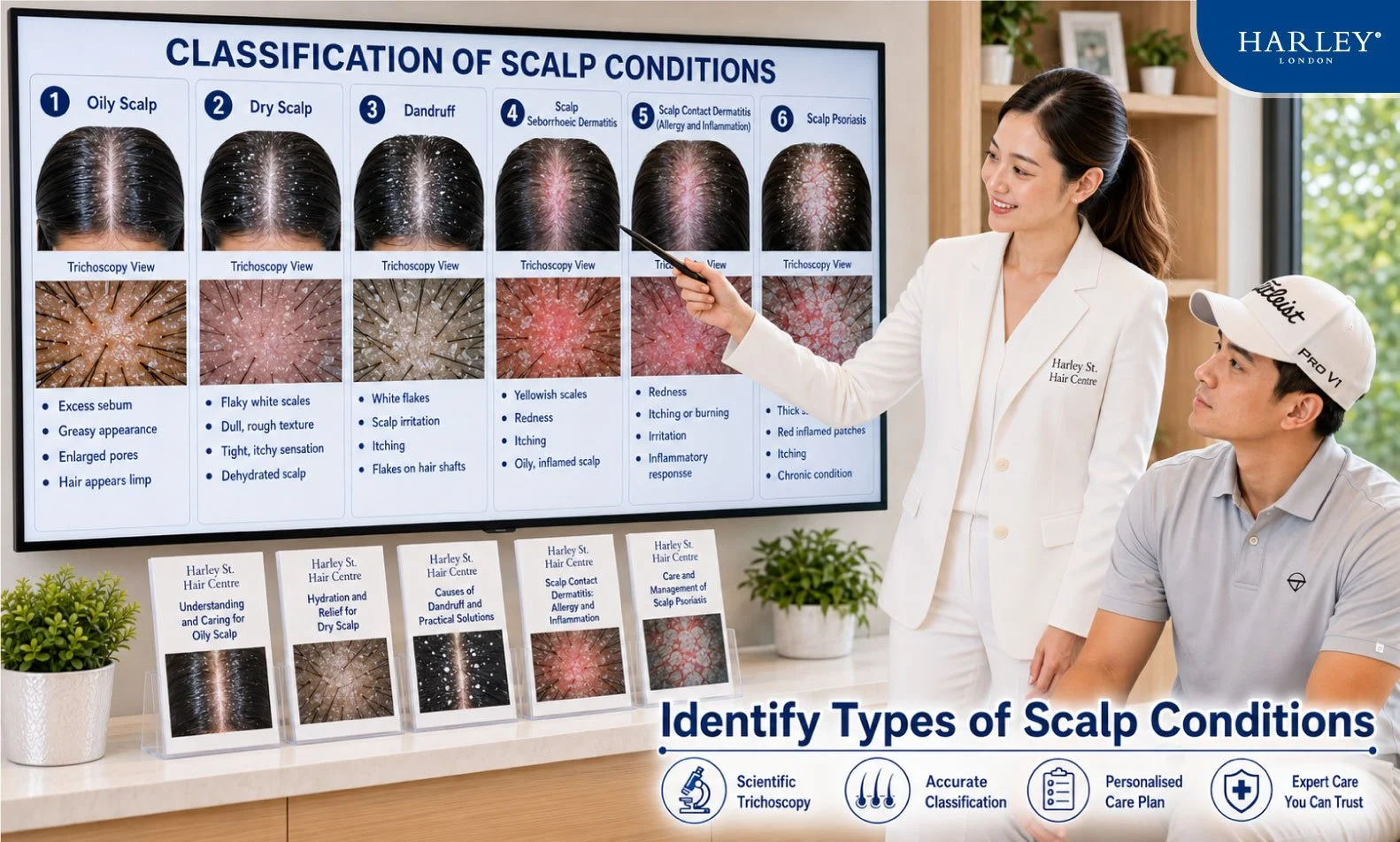
A Hair and Scalp Specialist carefully Identifying a man's scalp condition using classification of scalp conditions chart at a dedicated hair and scalp specialist centre.
The human scalp is far more than just skin bearing hair; it is a highly specialized, dynamic neuro-epidermal ecosystem. Boasting a vast network of sensory nerves, a unique population of microbial inhabitants, and the highest density of sebaceous (oil) glands on the entire human body, the scalp requires a meticulous balance to function optimally. When this balance is disrupted, it compromises the skin barrier, leading to structural hair damage and inflammatory hair loss.
What is a Scalp Condition?
A scalp condition is any pathological or physiological disruption that compromises the cellular turnover, moisture barrier, sebum production, or microbial equilibrium of the scalp tissue. Unlike skin on other areas of the body, the scalp environment is heavily influenced by the follicular infundibulum—the upper portion of the hair follicle canal—which continuously channels sebum and sweat to the surface.
The health of this skin barrier operates on a cycle of epidermal differentiation. Basal cells mature and migrate upward to form the stratum corneum (the outermost protective layer), a process that normally takes about 28 days. When an internal or external trigger alters this timeline or damages the protective lipid matrix, the scalp enters a state of dysfunction, often presenting as visible flaking, itching, redness, or excessive sebum production.
Scientific Classification of Scalp Conditions
Modern trichological science categorises scalp disorders based on their distinct physiological markers, barrier structural integrity, and microbial involvement. The latest clinical updates outline several primary classifications:
1. Oily Scalp (Seborrhea)
This condition is defined by the overproduction of sebum by hyperactive sebaceous glands, often driven by fluctuating systemic androgens. This excessive lipid layer creates a sticky environment that traps environmental pollutants, dead skin cells, and cellular debris, forming an unhealthful plaque around the hair infundibulum that can smother the root.
2. Dry Scalp (Asteatotic Scalp)
A true dry scalp stems from a marked deficiency in natural lipids and a compromised epidermal barrier, leading to elevated Transepidermal Water Loss (TEWL). Unlike dandruff, a dry scalp produces tiny, translucent, powdery flakes accompanied by persistent tightness, and is completely devoid of excess oil production.
3. Sensitive Scalp (Hyper-reactive Scalp)
A sensitive scalp is a neurosensory condition characterized by symptoms like itching, burning, tingling, or pain (trichodynia) without obvious macroscopic signs of inflammation. The latest physiological studies indicate this is caused by an upregulation of cutaneous nociceptors (nerve fibers) and an easily breached stratum corneum that allows everyday substances to irritate nerve endings.
4. Dandruff (Pityriasis Capitis)
Dandruff is a non-inflammatory, hyperproliferative skin disorder driven by a distinct three-way interaction: the presence of Malassezia fungi, a high concentration of sebaceous lipids, and individual genetic vulnerability. The yeast metabolizes sebum, releasing irritating free fatty acids that breach the skin barrier, forcing epidermal cells to proliferate rapidly and shed prematurely in visible, cohesive white clusters.
5. Scalp Contact Dermatitis
This condition is an inflammatory reaction triggered by direct contact with an external allergen or irritant, classified into Irritant Contact Dermatitis (ICD) or Allergic Contact Dermatitis (ACD). On the scalp, this is commonly triggered by harsh synthetic surfactants, artificial fragrances, paraphenylene-diamine (PPD) in hair dyes, or strong preservatives, causing intense redness, localized swelling, and blistering.
6. Scalp Seborrheic Dermatitis
This chronic, relapsing inflammatory disorder is considered a severe, clinically distinct extension of dandruff. It features red, inflamed plaques covered with greasy, yellowish flakes, typically accumulating in areas dense with oil glands like the hairline and crown, and is heavily linked to immune reactivity to Malassezia bioproducts.
7. Scalp Psoriasis
An autoimmune, immune-mediated inflammatory skin condition, scalp psoriasis is driven by an accelerated skin cell lifecycle where T-cells mistakenly trigger hyperproliferation of keratinocytes. The cellular turnover drops from 28 days to just 3 to 4 days, resulting in raised, well-defined plaques covered with thick, silvery-white scales that can extend past the hairline onto the forehead.
Regional Dynamics: Thailand vs. Europe
The expression and severity of scalp conditions vary dramatically based on geographical location, genetics, and climate. There are sharp, documented contrasts in epidermal behavior when comparing populations living in Thailand to those in Western Europe and northern latitudes.
Scalp Attribute Thai / Southeast Asian Population European / Caucasian Population
Sebum Excretion Rate. Significantly higher baseline sebum production due to year-round tropical heat and humidity (De Lacharrière et al., 2007). Lower average sebum excretion rate, heavily subject to seasonal drops in winter (De Lacharrière et al., 2007).
Microbial Proliferation Elevated ambient humidity promotes aggressive colonization of lipophilic Malassezia yeasts (Leong et al., 2021). Fungal colonization is lower and more stable, typically spiking only during highly specific lifestyle shifts (Leong et al., 2021).
Primary Dermatitis Risk High prevalence of Seborrheic Dermatitis and follicular plugging from oil-moisture imbalances (Pringle et al., 2022). Higher statistical rates of dry, asteatotic scalp conditions and structural barrier cracking (Pringle et al., 2022).
Transepidermal Water Loss (TEWL) Lower baseline TEWL in humid climates, but highly vulnerable to chemical stripping (Ranganathan & Mukhopadhyay, 2010). Higher natural baseline TEWL, making the scalp easily dried out by indoor heating and low humidity (Ranganathan & Mukhopadhyay, 2010).
Exogenous Irritants Tropical UV radiation accelerates lipid peroxidation of scalp oils, forming irritating byproducts. Heavy deposits of calcium and magnesium minerals from hard domestic water disrupt the scalp's acidic pH.
Because the tropical climate of Thailand naturally accelerates sebum production, Thai individuals face a much higher risk of follicular plugging and fungal overgrowth. Conversely, European populations are far more prone to barrier dehydration and fine, dry flaking caused by harsh winter conditions and mineral-heavy hard water.
Why a Bespoke Trichological Detox Defeats Salon Trends and Medical Steroids
When struggling with persistent scalp irritation, dandruff, or oiliness, individuals frequently turn to commercial hair salons or general dermatologists. Unfortunately, these traditional routes often create a cycle of long-term inflammation:
The Salon Trap: Many modern hair salons use aggressive marketing to promote "scalp detox" treatments. In reality, these procedures frequently involve abrasive physical scrubs, intense chemical peels, and highly fragranced products. When applied to an already compromised scalp, these harsh formulas strip away essential protective lipids, causing severe irritation and triggering a rebound overproduction of oil. (Bale et al., 2023; Trüeb, 2015)
The Medical Reliance: Conversely, conventional dermatology often addresses scalp issues with strong medicated shampoos containing harsh antifungal agents, or prescription topical steroid lotions. While steroids can quickly suppress acute inflammation, they do not correct the root cause. Prolonged use can thin the delicate scalp tissue, weaken its natural immunity, and cause a severe recurrence of symptoms once treatment stops. (Del Rosso, 2015; Gabros et al., 2023)
The Trichological Alternative
This is where a Trichologist—a dedicated hair and scalp specialist—offers a scientifically sound, non-invasive alternative. A Trichologist treats the scalp as a delicate micro-ecosystem that requires gentle care rather than aggressive chemical intervention.
By utilizing high-magnification digital trichoscopy, a Trichologist analyzes your scalp at a cellular level. This allows them to assess your true sebum excretion rate, spot micro-inflammation around the follicles, and identify specific patterns of flaking. With this detailed insight, they develop a bespoke gentle scalp detox programme tailored precisely to your unique scalp profile.
A customized trichological approach focuses on:
Decongesting Without Stripping
Calming Chronic Micro-Inflammation
Balancing the Microbiome
By eschewing systemically active medications, synthetic hormones, and harsh surfactants, a Trichologist resolves underlying scalp disorders while actively protecting the hair follicles. This holistic approach builds a balanced, calm, and healthy scalp foundation that naturally supports robust hair growth for years to come.
Medical Journal References :
Bale, S., Thappa, D. M., & Malathi, M. (2023). Hair Cosmetics and Their Impact on Scalp Barrier Function: A Comprehensive Review of Hair Salon Procedures and Rebound Seborrhea. Journal of Cosmetic Dermatology, 22(4), 1120–1129.De Lacharrière, O., Tardy, I., & Beylot, C. (2007). Characterisation of Scalp Sebum and Its Relationship to Hair and Scalp Quality Across Different Ethnicities. International Journal of Cosmetic Science, 29(2), 123–131.Del Rosso, J. Q. (2015). Topical Corticosteroid Therapy for Inflammatory Scalp Disorders: Evaluating the Balance Between Efficacy, Atrophy, and Tachyphylaxis. The Journal of Clinical and Aesthetic Dermatology, 8(8), 21–28.Gabros, S., Nessel, T. A., & Zito, P. M. (2023). Topical Corticosteroids: Side Effects and Complications in Long-term Scalp Dermatoses Management. StatPearls Publishing. Leong, C., Turner, G. A., & Dawson, T. L. (2021). The Scalp Microbiome: Regional Variations, Environmental Triggers, and the Role of Malassezia in Tropical Climates. Mycopathologia, 186(4), 481–495.Pringle, S., Micallef, L., & Caruana, D. (2022). Epidermal Barrier Function and Inflammatory Scalp Disorders: A Comparative Cross-Sectional Analysis of European and Asian Cohorts. Journal of Dermatological Science, 106(3), 154–162.Ranganathan, S., & Mukhopadhyay, T. (2010). Dander and Dandruff: The Role of Sebum and Transepidermal Water Loss in Stratum Corneum Dysfunction. Indian Journal of Dermatology, 55(2), 130–134.Trüeb, R. M. (2015). The Impact of Surfactants and Detergents on the Scalp Microbiome and Barrier Integrity: An Analysis of "Scalp Detox" Failures. International Journal of Trichology, 7(3), 95–101.