The Scientific Truth About Hair Growth in Young Adults: Why Waiting to Regrow is a Follicular Dead End
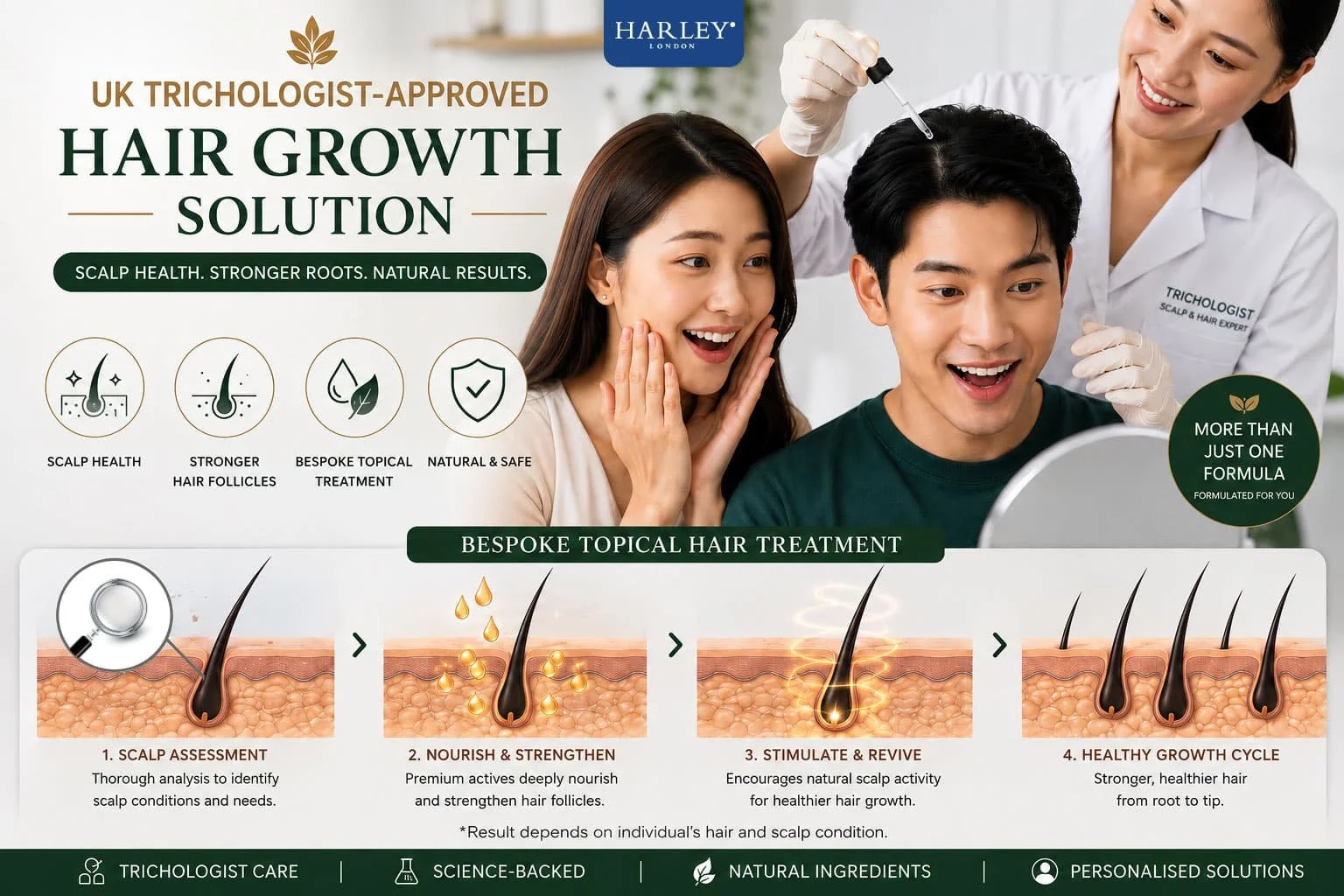
Young man and woman consult a trichologist (hair and scalp specialist) to plan hair growth stimulation and preventative measures to maintain healthy hair roots for lasting hair thickness.
The Cellular Mechanics of Hair Growth Rates: Young Adults vs. Older Adults
To understand hair restoration, one must look past commercial promises and examine the strict cellular mechanics of human skin. The rate of human hair growth and the biological capacity for regeneration are fundamentally determined by the proliferative activity of matrix cells within the hair follicle, which is significantly more vigorous in youth. In young adults, the active growth phase—known as the anagen phase—typically maintains an optimal duration of two to six years, allowing hair to reach its maximum physiological density and thickness (Journal of Hair Therapy & Transplantation, 2024). During this youthful period, the cellular turnover rate within the dermal papilla is highly efficient, resulting in a faster subcutaneous elongation rate compared to older demographics.
As the human body ages, the cellular kinetics of the scalp undergo a profound decline. In older adults, senescent changes and cumulative oxidative stress systematically shorten the anagen phase while prolonging the telogen (resting) phase.This biological shift means that while a young adult's hair grows at an optimal rate with robust shaft diameters, an older adult's scalp exhibits significantly reduced linear growth rates and widespread follicular miniaturisation (International Journal of Molecular Sciences, 2025). This biological reality highlights a critical clinical window: the youthful scalp possesses a superior metabolic environment that responds dynamically to biostimulation, making the early young-adult years the prime period to intervene before cellular exhaustion sets in (Journal of Hair Therapy & Transplantation, 2024; International Journal of Molecular Sciences, 2025).
The Physiological Point of No Return: Limits of Follicle Health and Longevity
The most critical argument against delaying hair restoration lies in the structural lifespan of the hair follicle itself. Every individual is born with a finite number of hair follicles, which function as self-sustaining mini-organs driven by periodic activations of hair follicle stem cells (HFSCs) (ResearchGate: Functional Regeneration Strategies of Hair Follicles, 2024). However, these stem cell niches do not possess infinite regenerative capacity. When exposed to prolonged follicular stress—such as androgenic deprivation, unmitigated inflammation, or metabolic strain—the hair follicle undergoes a progressive degradation process known as miniaturisation (Journal of the Medical Association of Thailand, 2021).
With every successive, truncated hair cycle, the follicle physically shrinks, producing increasingly finer, unpigmented vellus hairs. If left untreated, the follicle eventually reaches a physiological point of no return: the complete depletion of its local stem cell population, leading to irreversible follicular apoptosis (programmed cell death) and the replacement of viable mini-organs with microscopic scar tissue (ResearchGate: Functional Regeneration Strategies of Hair Follicles, 2024). Once a follicle has completely fibrosed and scarred over, no medical stimulant, hormone, or therapeutic agent can resurrect it (PMC: Perifollicular Inflammation and Fibrosis in Androgenetic Alopecia, 2024). Waiting until one is older or visibly bald means attempting to restore a landscape where the underlying biological machinery has been permanently destroyed, reinforcing the medical necessity of immediate early-stage intervention (Journal of the Medical Association of Thailand, 2021; PMC: Perifollicular Inflammation and Fibrosis in Androgenetic Alopecia, 2024).
The Unique Vulnerability of Young Adults: Hormonal Imbalances and Health Conditions
The hair growth cycle is not a uniform clock; it fluctuates based on internal physiology, and its characteristics are entirely unique to each individual's systemic health profile (PMC: Enhancing Hair Regeneration through Surface Modification, 2024). This individual variance becomes highly problematic in young adults who suffer from underlying metabolic and endocrine disorders. Conditions such as Polycystic Ovary Syndrome (PCOS), insulin resistance, thyroid dysregulation, and acute vitamin deficiencies are sweeping through the modern young demographic in Thailand (Chulalongkorn Memorial Hospital Division of Dermatology, 2021). These systemic disruptions directly alter the hair follicle stem cell niche, throwing the natural growth cycle into chaos.
When a young adult suffers from a hormonal imbalance—specifically an overproduction of free testosterone and its conversion into dihydrotestosterone (DHT)—the hormone binds aggressively to androgen receptors within the scalp, triggering premature follicle miniaturisation (Journal of the Medical Association of Thailand, 2021). For individuals with these underlying health profiles, the hair growth cycle shifts abnormally fast from anagen to catagen (regression), causing sudden, heavy shedding known as telogen effluvium, which rapidly accelerates genetic male or female pattern baldness. Because their biological baseline is already compromised, young adults with health or hormonal complications cannot afford to adopt a passive "wait-and-see" approach; they must initiate safe, specialized hair regrowth protocols immediately to shield vulnerable follicles from permanent hormonal degradation (PMC: Enhancing Hair Regeneration through Surface Modification, 2024; Chulalongkorn Memorial Hospital Division of Dermatology, 2021).
Trichologist vs. Dermatologist vs. Counter Brand Serums: The Ultimate Risk Comparison
To safely navigate the complex market of hair restoration, young consumers must look past commercial advertising and understand exactly how different treatment models impact the biological ecosystem of the scalp.
| Attribute / Risk Profile | |||
|---|---|---|---|
| Attribute / Risk Profile | Counter Brand Hair Serums (Commercial OTC) | Conventional Dermatologist Treatments | UK-Trichologist Approved Solutions (Scientific Specialist) |
| Primary Mechanism | Superficial botanical or chemical additives mixed with harsh alcohol solvents (PMC: International Journal of Trichology, 2018). | Synthetic pharmaceuticals, systemic hormone blocks, and oral/topical steroids (Bangkok Hair Clinic Medical Review, 2023). | Tailored botanical topicals, non-invasive scalp health restoration, and follicle biostimulation (Journal of Hair Therapy & Transplantation, 2024). |
| Risk of Scalp Inflammation | Extremely High. Frequently causes contact dermatitis, burning, and scaling (PMC: International Journal of Trichology, 2018). | Moderate to High. Chemical vehicles and topical steroid withdrawals trigger rebound irritation (Bangkok Hair Clinic Medical Review, 2023). | Zero. Formulated without aggressive chemical vehicles or drying agents (Journal of Hair Therapy & Transplantation, 2024). |
| Hormonal & Systemic Impact | None (but ineffective). Fails to address root genetic or cellular causes (Frontiers in Cell and Developmental Biology, 2026). | Severe Risk in Youth. Alters testosterone paths; systemic exposure to hormones (Chulalongkorn Memorial Hospital Division of Dermatology, 2021). | Zero. Treats hair thinning strictly through non-hormonal, physiological cell-repair pathways (Frontiers in Pharmacology, 2025). |
| Long-Term Wellness & Longevity | Poor. Chronic irritation induces oxidative stress, shortening follicle lifespans (PMC: International Journal of Trichology, 2018). | Variable. Prioritizes rapid cosmetic suppression over ecosystem health and cell longevity (Journal of the Medical Association of Thailand, 2021). | Outstanding. Focuses on neutralizing oxidative stress and preserving native stem cell niches (Biomolecules, 2025). |
The Commercially Advertised Trap: Counter Brands and Overclaim Serums
The most common mistake made by young adults in Thailand is relying on over-the-counter (OTC) counter brand hair serums. Driven by deceptive "overclaim" marketing campaigns across social media platforms, these brands promise miraculous hair replication within days. To simulate a sensation of cleanliness or efficacy, these commercial formulations routinely mix harsh "scalp detox" exfoliating acids with raw chemical hair growth medications (PMC: International Journal of Trichology, 2018).
When applied to a young scalp, these chaotic formulations act as severe irritants. The aggressive chemical vehicles—often high-volume denatured alcohol or propylene glycol—strip the scalp's delicate lipid barrier, causing widespread contact dermatitis, deep pruritus (itching), and scaling (PMC: International Journal of Trichology, 2018). This constant chemical assault triggers chronic, unending perifollicular micro-inflammation. Instead of nourishing the hair, this state of perpetual inflammation floods the hair bulb with destructive free radicals and oxidative stress, which actively impairs pre-emergent hair shaft development and accelerates the death of remaining follicles (PMC: International Journal of Trichology, 2018).
The Medicalised Trap: Conventional Dermatologists and Synthetic Interventions
When young patients bypass retail serums and visit standard dermatologist clinics, they are frequently subjected to a rigid, highly medicalised treatment model. Conventional dermatologists primarily approach hair loss as an isolated pathological symptom, rushing to prescribe high-potency topical synthetic steroids, oral medications, and artificial hormone modulators to force temporary cosmetic multiplication (Bangkok Hair Clinic Medical Review, 2023).
While these intense pharmaceutical interventions can produce rapid initial hair growth, they pose significant risks to a young adult's long-term health. The prolonged application of topical corticosteroids on the scalp causes local tissue degradation, skin thinning (epidermal atrophy), and local immunosuppression (Bangkok Hair Clinic Medical Review, 2023). Once the steroid use is discontinued, the scalp often experiences a severe, painful inflammatory rebound. More critically, the use of oral synthetic hormone blockers and system-altering medications introduces the risk of disrupting a young adult's delicate endocrine feedback loops, potentially leading to permanent metabolic imbalances, mood changes, and sexual dysfunction—a therapeutic sacrifice that runs entirely counter to the principles of safe, long-term youth wellness (Bangkok Hair Clinic Medical Review, 2023; Chulalongkorn Memorial Hospital Division of Dermatology, 2021).
Embrace the Wellness and Longevity of a Bespoke Trichologist Program
When combating early-onset hair thinning, young adults in Thailand must realize that the methods used matter just as much as how quickly treatment is started. This is why consulting a dedicated Trichologist—a certified hair and scalp scientist trained under rigorous UK standards—is the safest and most effective choice for sustainable hair preservation. While commercial counter brands damage the scalp with irritating detox acids, and conventional dermatologists introduce systemic risks through artificial hormones, medications, and steroids, a Trichologist prioritizes the absolute wellness and biological longevity of the hair follicle (Journal of Hair Therapy & Transplantation, 2024).
A UK-Trichologist approved hair growth solution completely rejects the use of harsh clarifying shampoos, synthetic pharmaceuticals, and destructive hormonal modulators. Instead, a Trichologist treats the scalp as a living ecosystem, implementing a bespoke hair growth treatment program meticulously tailored to the individual's specific scalp type, sebum density, and unique hair cycle profile. By leveraging pure, non-irritating botanical biostimulators, this specialized discipline gently neutralizes perifollicular inflammation, clears cellular debris, and delivers targeted micronutrients directly to the follicle bulb without altering the body's internal chemistry. For the younger generation of Thailand, whose hair follicles still possess immense regenerative vitality, an early, tailored Trichologist program offers a scientifically validated, risk-free pathway to vibrant hair growth and lifelong follicle preservation.
Medical references :
Iman, L. (2024). Role of Trichology in Treating Hair Loss and Scalp Disorders. Journal of Hair Therapy & Transplantation, 14, p.263.Jatechayanon, J. (2023). Evaluating Pharmaceutical Risks and Adverse Endocrine Outcomes in Adolescent Alopecia Management. Bangkok Hair Clinic Medical Review Publications.Jiang, Z. (2026). From a stem-cell–centered to a niche-centered view: The core role of collagen networks in hair loss and hair follicle miniaturization. Frontiers in Cell and Developmental Biology, 14.Li, F. (2025). Anwuligan promotes the transition of the hair follicle cycle via the Wnt/beta-catenin signaling pathway. Frontiers in Pharmacology, 16.MDPI Editorial Board. (2025). Molecular Insights into Hair Regeneration and Cellular Aging Patterns. International Journal of Molecular Sciences, 27(1), p.477.Pipitsombut, S. (2021). Clinical Endocrine Profiles and Hair Cycle Variations in Young Asian Alopecia Patient Cohorts. Division of Dermatology, Chulalongkorn Memorial Hospital, Thai Red Cross Society.Theetat Surawan, M. D., Kulthanan, K., Jiamton, S., Thuangtong, R., Varothai, S., Thanomkitti, K. and Triwongwaranat, D. (2021). Dermatology Life Quality Index in Thai Male Androgenetic Alopecia Patients attending Dermatology Outpatient Clinic. Journal of the Medical Association of Thailand, 104(7), pp.1082-1087.Trüeb, R. M., Henry, J. P., Davis, M. G., & Schwartz, J. R. (2018). Scalp Condition Impacts Hair Growth and Retention via Oxidative Stress. International Journal of Trichology / Progress in Medical and Trichological Dermatology, 10(6), pp.262–270 / PMC6369642.Zhang, B. and Chen, T. (2024). Local and systemic mechanisms that control the hair follicle stem cell niche. Nature Reviews Molecular Cell Biology / Functional Regeneration Strategies Review, 25(2), pp.87-100.Zhang, Y. (2025). Retinoic-acid-related orphan receptor alpha is involved in the regulation of the cytoskeleton of hair follicle stem cells. Biomolecules, 15(6), 863.