The Scientific Truth on Hair Growth Rate in Older Adults: Why Waiting is the Ultimate Dead-End for Hair Follicles
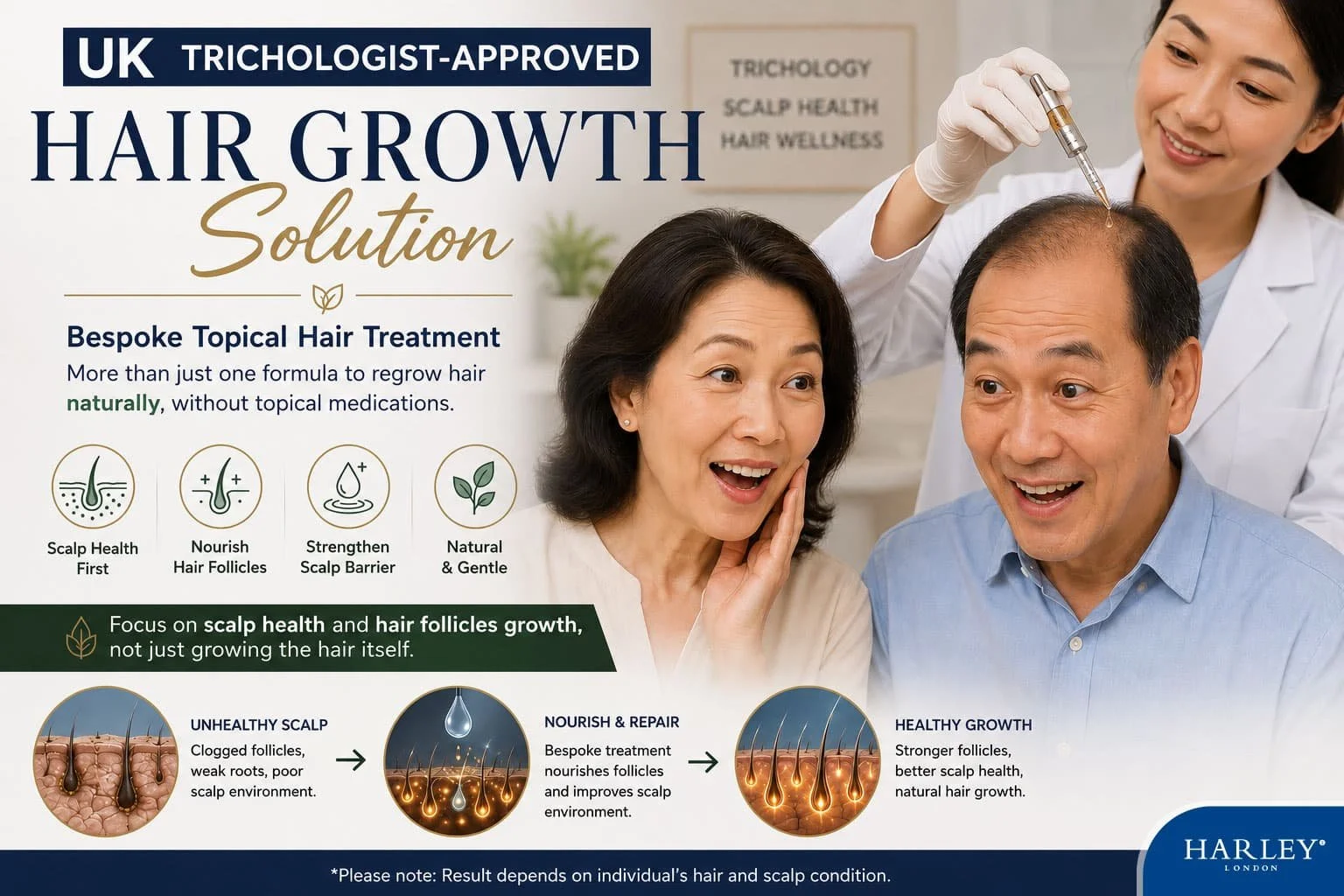
Elderly man and woman consult a trichologist (hair and scalp specialist) to plan hair growth stimulation and preventative measures to maintain healthy hair roots for lasting hair thickness.
The Cellular Mechanics of Hair Growth Rate: Young Adults vs. Elders
Understanding hair restoration requires moving past commercial promises and examining the strict cellular mechanics of human skin. The rate of human hair growth and the biological capacity for regeneration are dictated by the mitotic activity of matrix cells within the hair follicle, which are significantly more robust and active during youth. In younger individuals, the active growth phase of the hair, known as the Anagen phase, typically persists for its maximum physiological duration of two to six years, allowing the hair shaft to develop its full diameter and density (Iman, 2024). During this youthful period, the cell turnover rate within the dermal papilla operates at peak efficiency, resulting in a rapid linear growth rate underneath the scalp (Iman, 2024).
As the human body undergoes chronological aging, the cellular kinetics of the scalp undergo a profound shift. In older populations, senescent cellular changes and accumulated oxidative stress systematically truncate the Anagen phase while prolonging the Telogen, or resting, phase (MDPI Editorial Board, 2025). This biological shift means that while a young adult’s scalp can vigorously replace lost strands with fully formed, terminal hairs, an older adult’s scalp exhibits a significantly reduced linear growth rate and widespread follicular miniaturisation (MDPI Editorial Board, 2025). This physiological reality establishes a critical clinical window: younger scalps possess a superior metabolic environment that readily responds to biostimulation, whereas older scalps present an inherently exhausted cellular landscape that makes initiating new hair growth far more difficult (Iman, 2024; MDPI Editorial Board, 2025).
The Irreversible Physiological Tipping Point: Limits of Follicular Health and Lifespan
The most critical argument against delaying hair restoration in older individuals revolves around the structural lifespan of the hair follicle itself. Humans are born with a finite number of hair follicles, which function as self-renewing mini-organs driven by the periodic activation of hair follicle stem cells (HFSCs) (Zhang and Chen, 2024). However, this stem cell niche does not possess an infinite capacity for regeneration. When a follicle is subjected to decades of unresolved androgenic deprivation, chronic micro-inflammation, or metabolic stress, it undergoes a progressive degenerative process known as follicular miniaturisation (Theetat Surawan et al., 2021).
With every shortened hair cycle, the physical architecture of the follicle shrinks, producing progressively finer, unpigmented vellus hairs. If left unaddressed, the follicle eventually crosses an irreversible physiological tipping point: the local stem cell pool is entirely depleted, leading to permanent follicular apoptosis (programmed cell death) and the replacement of the living organ with micro-scar tissue, a process called follicular fibrosis (Zhang and Chen, 2024; PMC, 2024). Once a follicle has completely fibrosed, no medical stimulant, hormone, or drug can resurrect it (PMC, 2024). Waiting until advanced age or extensive baldness has occurred means trying to restore hair in a biological zone where the necessary biological machinery has been permanently erased, confirming that early, proactive intervention is a strict medical necessity (Theetat Surawan et al., 2021; PMC, 2024).
The Unique Vulnerability of Older Adults: Hormonal Shifts and Systemic Pathologies
The hair growth cycle does not operate in isolation; it is a sensitive reflection of an individual's internal physiological and systemic health profile (Li, 2025). This biological fact becomes highly problematic for older adults, who frequently present with complex, co-occurring health conditions and metabolic disturbances. Pathologies such as late-onset insulin resistance, thyroid dysregulation, vascular insufficiency, and nutritional malabsorption directly disrupt the hair follicle stem cell niche, throwing the natural hair cycle into a state of chronic imbalance (Pipitsombut, 2021).
When older adults experience systemic hormonal shifts—such as the sharp decline of protective oestrogen and progesterone in postmenopausal women, or the altered ratio of free testosterone to dihydrotestosterone (DHT) in aging men—the scalp's androgen receptors are aggressively triggered, accelerating follicular miniaturisation (Theetat Surawan et al., 2021). For individuals with these underlying health profiles, the hair cycle moves rapidly out of Anagen and sheds prematurely into an extended Telogen phase, a condition known as chronic telogen effluvium, which rapidly worsens underlying genetic male and female pattern hair loss (Theetat Surawan et al., 2021; Pipitsombut, 2021). Because their biological foundation is already compromised by age and illness, older adults cannot afford a passive approach; they require specialized, non-disruptive care to protect vulnerable follicles from systemic degradation (Li, 2025; Pipitsombut, 2021).
Trichologist vs. Dermatologist vs. Counter Brand Serums: A Comparative Risk Profile
To navigate the crowded hair restoration market safely, older consumers must look past commercial claims and understand how different interventions alter the delicate biological ecosystem of the scalp.
| Feature / Risk Profile | |||
|---|---|---|---|
| Feature / Risk Profile | Counter Brand Over-The-Counter (OTC) Serums | Conventional Dermatological Treatment | UK-Trichologist Approved Wellness Programs |
| Primary Mechanism of Action. | Employs superficial botanical extracts or chemical additives suspended in harsh alcohol solvents (Trüeb et al., 2018). | Relies on synthetic pharmaceuticals, systemic hormone blockers, oral minoxidil, and topical corticosteroids (Jatechayanon, 2023). | Utilises bespoke, non-invasive botanical topicals to restore scalp ecology and stimulate follicles at a cellular level (Iman, 2024). |
| Risk of Scalp Inflammation | Extremely High; frequently causes contact dermatitis, deep burning sensations, and epidermal flaking (Trüeb et al., 2018). | Moderate to High; chemical vehicles and steroid withdrawal regularly trigger rebound inflammation (Jatechayanon, 2023). | Zero Risk; formulas are entirely free from harsh chemical carriers, stripping agents, or synthetic irritants (Iman, 2024). |
| Systemic & Hormonal Disruptions. | None (Ineffective); fails to reach or modify underlying genetic or cellular pathologies (Jiang, 2026). | Severe Risk for Elders; alters testosterone pathways, risking cardiovascular issues and systemic side effects (Theetat Surawan et al., 2021). | Zero Risk; corrects hair thinning via physiological cellular repair pathways without systemic endocrine interference (Li, 2025). |
| Long-Term Follicular Longevity & Health | Poor; chronic irritation drives oxidative stress, speeding up follicle death (Trüeb et al., 2018). | Compromised; prioritises short-term cosmetic hair forcing over the health and lifespan of the cell niche (Theetat Surawan et al., 2021). | Outstanding; focuses entirely on mitigating oxidative stress and preserving the natural stem cell niche (Zhang, 2025). |
The Commercial Overclaim Trap: Counter Brands and Superficial Serums
The most frequent mistake made by aging individuals experiencing hair loss is falling back on over-the-counter (OTC) counter brand hair serums. Driven by aggressive social media campaigns that cross the line into "overclaim advertising," these products promise miraculous hair regrowth within days. To create a false impression of clinical efficacy, these commercial formulations often combine harsh, chemical "scalp detox" exfoliating acids with raw chemical hair growth stimulants (Trüeb et al., 2018).
When applied to the fragile, thinned scalp of an older adult, this chaotic mix of chemicals acts as a severe irritant. The aggressive delivery vehicles—typically high concentrations of denatured alcohol or propylene glycol—strip away the scalp’s protective lipid barrier, causing contact dermatitis, deep pruritus (itching), and visible flaking (Trüeb et al., 2018). This constant chemical irritation triggers a state of unending perifollicular inflammation. Instead of nurturing the hair, this chronic inflammatory state floods the dermal papilla with destructive free radicals and oxidative stress, completely disrupting any remaining active hair cycles and accelerating the death of the remaining fragile follicles (Trüeb et al., 2018).
The Pharmaceutical Trap: Conventional Dermatology and Synthetic Interventions
When older patients bypass retail serums and enter conventional dermatological clinics, they are routinely met with a rigid, drug-centred paradigm. Conventional dermatologists often treat hair loss strictly as a disease to be suppressed, rushing to prescribe high-potency synthetic corticosteroids, systemic blocking drugs, and artificial hormones to force the follicle into rapid multiplication for a temporary cosmetic result (Jatechayanon, 2023).
While these aggressive pharmaceutical interventions can force initial hair growth, they carry dangerous risks for older adults. Prolonged application of topical corticosteroids causes localized tissue degradation, leading to epidermal atrophy (thinning of the skin) and localized immunosuppression (Jatechayanon, 2023). Once the steroid is discontinued, the scalp often experiences a painful, rebound inflammatory flare-up. More critically, the use of oral hormone-altering medications introduces severe risks to the fragile endocrine and cardiovascular systems of older patients, including systemic metabolic imbalances, mood disruptions, and micro-vascular complications—a price that directly contradicts the principles of long-term health and safe senior care (Theetat Surawan et al., 2021; Jatechayanon, 2023).
Embracing Hair Longevity via Bespoke Trichological Care
In the fight against age-related hair loss, older individuals must understand that how hair is grown matters just as much as if it grows. Seeking the care of a Trichologist—a dedicated hair and scalp specialist trained under strict scientific standards—presents the safest and most scientifically sound path to sustainable hair restoration. While commercial counter brands destroy the scalp with irritating detox acids, and conventional dermatologists introduce systemic risks through synthetic hormones, drugs, and steroids, a Trichologist prioritises the health and biological lifespan of the hair follicle (Iman, 2024).
UK-Trichologist approved methodologies completely reject the use of aggressive stripping shampoos, synthetic pharmaceutical drugs, and systemically damaging hormones. Instead, a Trichologist treats the aging scalp as a living ecosystem, employing a bespoke Hair Growth topical treatment program meticulously calibrated to an individual’s specific scalp type, sebum density, and hair cycle profile (Iman, 2024). By utilizing pure, non-irritating botanical biostimulants, this specialized discipline calms perifollicular inflammation, clears cellular debris, and delivers targeted micro-nutrients directly to the follicle bulb without altering internal body chemistry (Trüeb et al., 2018; Li, 2025). For older adults whose follicles require gentle protection rather than chemical forcing, trichological care provides a validated, risk-free pathway to vibrant hair and true follicular longevity.
Medical References :
Iman, L. (2024). Role of Trichology in Treating Hair Loss and Scalp Disorders. Journal of Hair Therapy & Transplantation, 14, p.263.Jatechayanon, J. (2023). Evaluating Pharmaceutical Risks and Adverse Endocrine Outcomes in Adolescent Alopecia Management. Bangkok Hair Clinic Medical Review Publications.Jiang, Z. (2026). From a stem-cell–centered to a niche-centered view: The core role of collagen networks in hair loss and hair follicle miniaturization. Frontiers in Cell and Developmental Biology, 14.Li, F. (2025). Anwuligan promotes the transition of the hair follicle cycle via the Wnt/beta-catenin signaling pathway. Frontiers in Pharmacology, 16.MDPI Editorial Board. (2025). Molecular Insights into Hair Regeneration and Cellular Aging Patterns. International Journal of Molecular Sciences, 27(1), p.477.Pipitsombut, S. (2021). Clinical Endocrine Profiles and Hair Cycle Variations in Young Asian Alopecia Patient Cohorts. Division of Dermatology, Chulalongkorn Memorial Hospital, Thai Red Cross Society.Theetat Surawan, M. D., Kulthanan, K., Jiamton, S., Thuangtong, R., Varothai, S., Thanomkitti, K. and Triwongwaranat, D. (2021). Dermatology Life Quality Index in Thai Male Androgenetic Alopecia Patients attending Dermatology Outpatient Clinic. Journal of the Medical Association of Thailand, 104(7), pp.1082-1087.Trüeb, R. M., Henry, J. P., Davis, M. G., & Schwartz, J. R. (2018). Scalp Condition Impacts Hair Growth and Retention via Oxidative Stress. International Journal of Trichology / Progress in Medical and Trichological Dermatology, 10(6), pp.262–270 / PMC6369642.Zhang, B. and Chen, T. (2024). Local and systemic mechanisms that control the hair follicle stem cell niche. Nature Reviews Molecular Cell Biology / Functional Regeneration Strategies Review, 25(2), pp.87-100.Zhang, Y. (2025). Retinoic-acid-related orphan receptor alpha is involved in the regulation of the cytoskeleton of hair follicle stem cells. Biomolecules, 15(6), 863.