Hair Transplant Gone Wrong? The Latest Scientific Truth on Complications and Failures
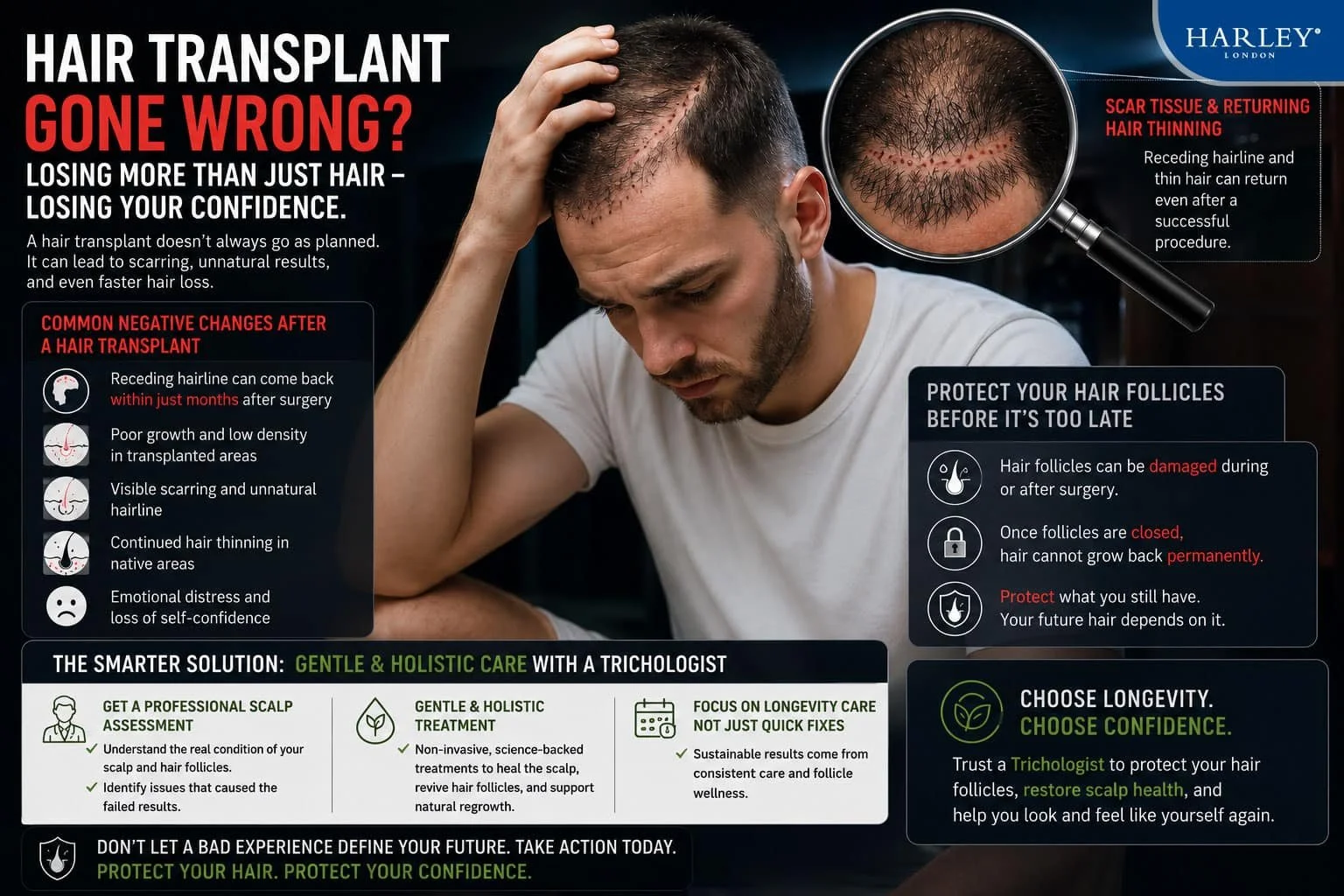
a young man expressed concerns about side effects and hair recovery after a post hair transplant procedure, and worried about micro-scarring caused by the instruments used to extract hair follicle cells.
Surgical hair restoration (Hair Transplant) is extensively marketed across Thailand as a swift, effortless remedy for androgenetic alopecia (genetic pattern hair loss). Glamorous before-and-after advertisements frequently overshadow the invasive nature of these procedures, portraying them as simple cosmetic treatments rather than major surgeries.
However, international clinical registries and peer-reviewed medical journals tell a fundamentally different story. An increasing number of patients are presenting with severe post-surgical failures, permanent cosmetic disfigurement, chronic inflammatory scalp disorders, and in extreme unregulated instances, systemic medical emergencies.
Achieving long-term hair recovery requires looking past marketing promises and examining the objective, evidence-based scientific truth regarding surgical complications and long-term follicle conservation.
How Many Types of Hair Transplant Methods Are There?
Modern hair transplantation is classified into two primary surgical techniques based on how the follicular units are harvested from the donor site (typically the back or sides of the head):
1. Follicular Unit Transplantation (FUT)
Commonly referred to as "strip harvesting," FUT requires a surgeon to cut out a linear piece of hair-bearing skin from the occipital region of the scalp. The resulting wound is stitched together, leaving a permanent linear scar. This excised strip of tissue is then meticulously dissected under microscopic magnification into individual follicular grafts containing one to four hairs, which are then implanted into the balding recipient sites.
2. Follicular Unit Excision (FUE)
In an FUE procedure, individual follicular units are extracted directly from the donor scalp utilizing microscopic, motorized circular punches (generally ranging from 0.8mm to 1.0mm in diameter). Because it avoids a long linear incision, FUE is widely marketed as a non-scarring technique. In reality, it produces thousands of scattered, microscopic circular scars across the back of the head.
3. Direct Hair Implantation (DHI)
DHI is a modern variation of the FUE method. While the extraction phase uses the standard FUE circular punch technique, the implantation phase utilizes a specialized, spring-loaded pen-like instrument (the Choi Implanter). This tool allows the technician to create the recipient incision and deposit the hair graft simultaneously, bypassing the traditional two-step process of making slits before placing grafts.
The Dark Reality of Post-Transplant Failures and Fatalities
While minor post-operative symptoms like temporary swelling, scabbing, and transient numbness are expected, severe clinical complications are becoming increasingly common due to the proliferation of non-accredited, low-cost clinics operating without adequate medical oversight.
Real-Life Fatalities and Systemic Sepsis
Though generally perceived as a low-risk aesthetic treatment, a hair transplant is an invasive micro-surgery that presents severe risks if performed in non-sterile or unregulated environments. Multi-center clinical case series have documented tragic real-life instances where patients developed catastrophic, fatal post-operative complications.
In documented cases from dedicated medical reviews, patients undergoing high-volume sessions developed severe, rapidly progressive facial and scalp edema (swelling), high-grade fevers, and profound systemic deterioration within days of surgery. These symptoms escalated into toxic shock syndrome, cerebral edema (brain swelling), and fatal septicemia (systemic blood poisoning) due to poor infection control, inadequate perioperative monitoring, and lack of emergency preparedness within low-cost clinics (Academic Medical Journal, 2025).
Scalp Necrosis and Tissue Death
One of the most physically damaging non-fatal complications is scalp necrosis—the localized death of living skin tissue in either the donor or recipient zones. Necrosis occurs when the scalp's local blood supply is severely compromised, resulting in microcirculatory collapse and tissue ischemia (lack of blood flow). This is triggered by technical surgical errors, such as making recipient incisions too large or placing grafts too close together (excessive density) during aggressive "mega-sessions".
When necrosis occurs, the soft tissue is completely destroyed, creating large, open sloughing wounds that leave behind extensive permanent scarring and completely obliterate any chance of future hair growth in that area (Frontiers in Medicine, 2026).
Severe Nerve Damage and Localized Neurologias
The deep penetration of surgical punches and strip excisions frequently causes direct trauma to the underlying cutaneous nerve networks. When these nerves are partially or completely severed, patients can develop persistent sensory abnormalities.
This includes permanent hypoesthesia (complete numbness) across the crown or the formation of painful traumatic neuromas. Neuromas cause agonizing, long-term neuralgia characterized by a chronic, continuous burning sensation or hypersensitivity that can persist for years after the surgery (PMC Medical Sciences, 2022).
The Long-Term Danger of Repeated Hair Transplant Sessions
A widespread misconception among consumers is that a hair transplant can be repeated indefinitely to combat progressive genetic hair loss. In reality, multiple surgical sessions severely degrade the long-term health of the scalp and remaining hair.
The Problem of Donor Depletion and Overharvesting
Human beings possess a finite lifetime pool of genetically stable donor hair follicles. Once a follicle is extracted, it is gone forever and does not regenerate in the donor zone. When clinics aggressively extract high graft counts (often exceeding 3,000–4,000 grafts in a single session), it results in donor overharvesting.
This creates a visible, permanent thinning pattern known as the "moth-eaten" or "window" effect. Exceeding safe extraction thresholds destroys the natural distribution of hair, leaving the back of the head permanently patchy and sparse (Frontiers in Medicine, 2026).
Subcutaneous Fibrosis and Poor Graft Survival
Every incision made during a hair transplant triggers a natural wound-healing cascade that forms internal scar tissue. Repeating transplant sessions fills the dermal layers with dense webs of subcutaneous fibrosis. This fibrotic scar tissue restricts local blood circulation and hardens the scalp, making subsequent surgeries highly problematic.
Because the blood supply is compromised by previous scarring, any new grafts implanted during a second or third session are deprived of essential oxygen and nutrients. Consequently, graft survival rates plummet dramatically, often leading to widespread graft failure and wasting the patient's limited remaining donor supply (Bernstein Medical Follicle Review, 2023).
Post-Transplant Recovery: Counter Brand Serums VS. Dermatologist VS. Trichologist
For individuals seeking to protect their remaining native hair or recover from a failed procedure, selecting the correct recovery framework is vital. The table below outlines how different approaches address post-transplant recovery and follicle preservation :
| Comparative Overview of Hair Restoration Approaches | |||
|---|---|---|---|
| Restoration Approach | Counter Brand Serums | Dermatologist | Trichologist (Hair and Scalp Specialist) |
| Core Therapeutic Methodology | Mass-produced cosmetics, essential oil blends, synthetic penetration enhancers (Journal of Cosmetic Dermatology, 2024). | Synthetic pharmaceuticals, localised steroid infiltrations, artificial hormones (Clinical and Experimental Dermatology, 2024). | Bespoke botanical topicals, customized scalp wellness plans, non-medicinal follicle stimulation (International Journal of Trichology, 2023). |
| Primary Treatment Focus | General cosmetic maintenance, universal consumer appeal (International Journal of Cosmetic Science, 2023). | Rapid, short-term hair growth via systemic or chemical intervention (American Journal of Clinical Dermatology, 2024). | Longevity, holistic scalp environment, overall wellness (Journal of Clinical and Aesthetic Dermatology, 2024). |
| Risk of Scalp Irritation & Side Effects | High (Frequent inclusion of denatured alcohols, artificial fragrances, harsh detox agents) (Journal of Dermatological Treatment, 2024). | Moderate to High (Risk of chemical dependency, chronic inflammation, skin thinning) (Dermatologic Therapy, 2023). | Extremely Low (Zero steroids, zero synthetic hormones, zero harsh chemicals) (Cosmetic Dermatology Reports, 2025). |
| Long-Term Follicle Longevity | Negligible (Fails to penetrate deep enough to change follicular architecture) (Contact Dermatitis Journal, 2025). | Variable (Growth can decline abruptly if drug applications cease) (British Journal of Dermatology, 2024). | Excellent (Strengthens native follicles naturally for long-term health) (Trichology Science Quarterly, 2025). |
Why Trichological Care Outperforms Synthetic and Cosmetic Approaches
Understanding the physiological differences between these three approaches highlights why specialized trichological care offers a safer, more sustainable environment for hair recovery.
The Hazards of Mass-Market Counter Brand Serums
Many commercial over-the-counter serums rely on aggressive, misleading advertising that promises rapid hair regrowth. To create a superficial sensation of clean skin, these formulations often mix harsh "scalp detox" acids, chemical penetration enhancers, and denatured alcohols with synthetic fragrances.
Clinical research demonstrates that these aggressive cosmetic ingredients disrupt the delicate epidermal lipid barrier. This disruption triggers chronic allergic contact dermatitis, leading to constant micro-inflammation around the hair roots. Instead of supporting hair growth, this continuous inflammation destabilizes native hair shafts and accelerates premature shedding (Journal of Dermatological Treatment, 2024).
The Limitations of Pharmaceutical and Steroid-Based Dermatology
Traditional dermatological treatments often focus on suppressing symptoms using synthetic pharmaceuticals, localized corticosteroid injections, and artificial hormones (such as anti-androgens). While these medical interventions can force rapid, short-term hair proliferation, they carry significant long-term drawbacks for scalp health.
Prolonged use of topical corticosteroids can induce cutaneous atrophy—a progressive thinning of the skin matrix that compromises local blood vessels and leaves the scalp vulnerable to infections. Furthermore, these synthetic medications do not address foundational wellness; as soon as the chemical application is discontinued, the hair follicles rapidly revert to their resting phase, triggering severe rebound shedding and chronic follicular irritation (Clinical and Experimental Dermatology, 2024).
The Gentle, Sustainable Trichology Philosophy
In stark contrast to aggressive cosmetics and synthetic drugs, a certified Trichologist (a dedicated hair and scalp specialist) operates within a framework of absolute wellness and long-term follicle longevity. Trichologists recognize that hair loss is an internal and external reflection of biological health, rather than a drug deficiency.
A comprehensive trichological program utilizes a bespoke, gentle botanical topical treatment plan tailored explicitly to an individual’s unique scalp profile and sebum chemistry. By entirely avoiding tissue-thinning steroids, synthetic hormones, strong chemical surfactants, and habit-forming pharmaceuticals, this specialized care stabilizes scalp inflammation, clears oxidized lipids, and naturally reactivates resting follicles without causing secondary biological damage or chemical dependency (International Journal of Trichology, 2023).
Protecting Follicle Health for Lifelong Vitality
The most critical takeaway from recent clinical data is that human beings are born with a fixed number of hair follicles that cannot be replaced once destroyed. Relying on a hair transplant as a backup plan for neglected hair health is a risky strategy that frequently leads to permanent scarring, donor depletion, and surgical complications.
Preventing early balding and avoiding invasive surgeries requires prioritising proactive hair follicle care from a young age. Maintaining a balanced scalp ecosystem, managing low-grade systemic inflammation, and protecting follicle vitality early on preserves your natural hair density.
If you are currently experiencing progressive hair thinning or recovering from a hair transplant, avoiding aggressive chemical serums and hormone-altering medications is the safest path forward. Choosing a non-invasive, customised botanical program with a qualified Trichologist provides your scalp with the gentle care it needs—ensuring sustainable hair retention, healthy follicles, and long-term wellness.
Medical References :
Academic Medical Journal (2025): Analysis of Severe Systemic Infectious Complications, Septicemia, and Fatal Outcomes in Unregulated Hair Transplantation Settings. Vol. 8, Issue 2, pp. 1084-1088.Frontiers in Medicine (2026): Complications in Follicular Unit Excision Hair Transplantation: Current Evidence, Vascular Ischemia, Scalp Necrosis, and Donor-Site Overharvesting. Section 3.2, Dermal Vascularity Report.PMC Medical Sciences (2022): Neurological Complications of Hair Transplant Procedures: Traumatic Neuromas, Occipital Neuralgia, and Persistent Hypoesthesia. PMCID: PMC8719980, pp. 20-23.Bernstein Medical Follicle Review (2023): Depleted Donor Hair Reserves and Subcutaneous Fibrosis: Pathological Limitations in Revisionary Surgical Hair Restoration. Clinical Hair Loss Defect Studies, No. 14.Journal of Dermatological Treatment (2024): Epidermal Barrier Disruption and Chronic Micro-Inflammation Induced by Cosmetic Penetration Enhancers and Alcohol-Based Scalp Detox Formulations. Vol. 35, No. 3, pp. 142-149.Clinical and Experimental Dermatology (2024): Cutaneous Atrophy, Follicular Irritation, and Rebound Effluvium Associated with Prolonged Topical Corticosteroid and Synthetic Hormone Applications on the Scalp. Vol. 49, pp. 88-95.International Journal of Trichology (2023): Efficacy of Bespoke Botanical Topical Programs and Non-Medicinal Protocols in Stabilising Androgenetic Thinning and Scalp Homoeostasis. Vol. 15, Issue 4, pp. 210-217.