What Is Dandruff? Exploring Scalp Health, Tropical Climates, and the Hidden Side Effects of Anti-Dandruff Shampoos
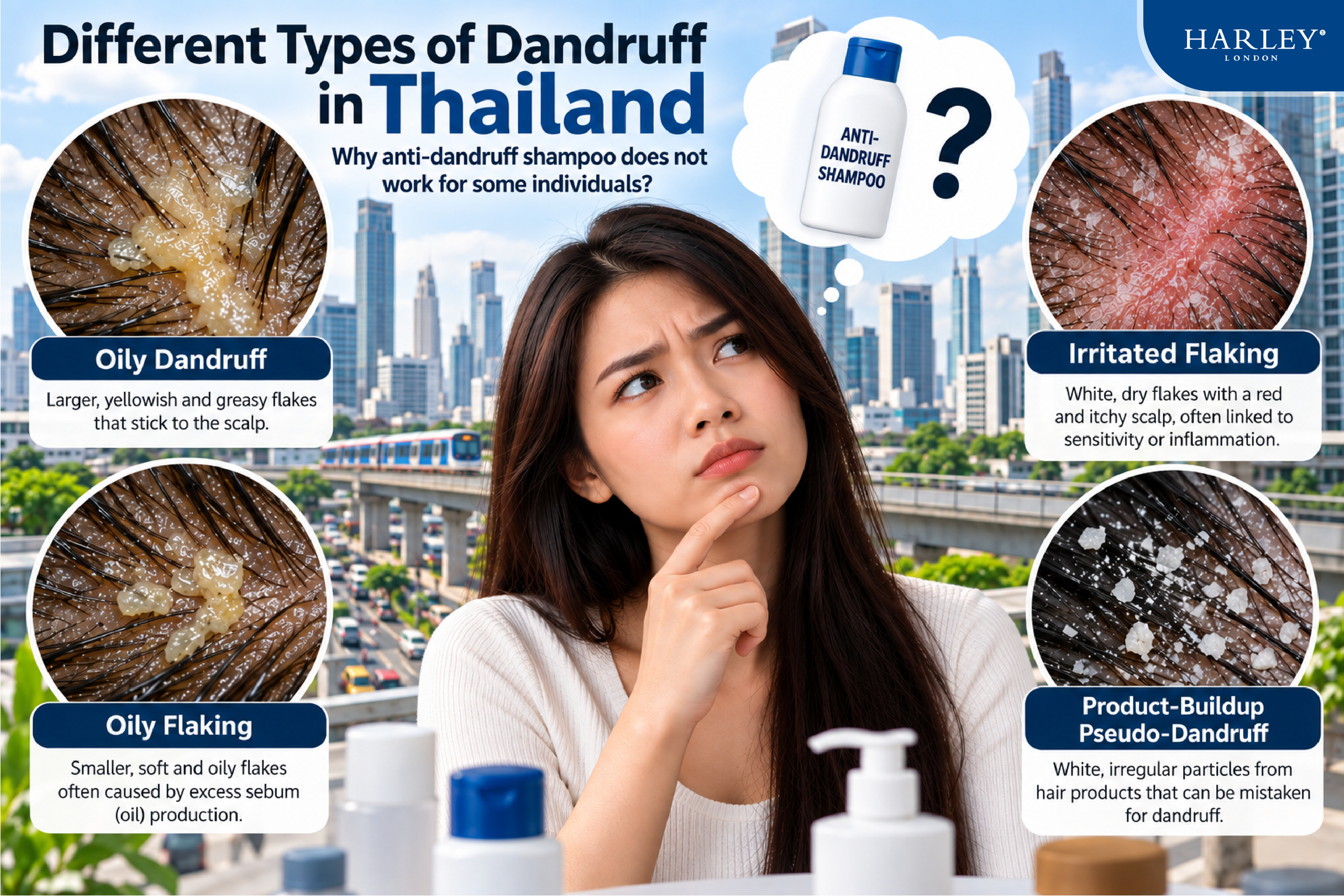
Bangkok office lady pondering about dandruff types and the use of anti-dandruff shampoos for scalp.
Dandruff (physiologically termed pityriasis capitis) is a non-inflammatory or mild inflammatory dermatological condition of the scalp characterised by excessive scaling, flaking, and pruritus (itching). At a cellular level, it arises when the normal epidermal renewal process accelerates: standard epidermal turnover of approximately 28 days speeds up to 9–15 days, causing immature, nucleated corneocytes to clump together into visible white or yellowish flakes. The primary physiological trigger is the overgrowth of Malassezia yeasts—specifically Malassezia globosa and Malassezia restricta—which metabolise natural scalp sebum into free fatty acids such as oleic acid. These unsaturated fatty acids penetrate the stratum corneum, compromising the scalp epidermal barrier and triggering local micro-inflammation and cell hyperproliferation.
— Borda, L. J., & Wikramanayake, T. C., 2015. Seborrheic Dermatitis and Dandruff: A Comprehensive Review. Journal of Clinical and Investigative Dermatology, 3(2), 10–15.
The Tropical Triad: Why Thailand’s Climate Triggers Constant Scalp Issues
Living in Thailand presents distinct micro-environmental challenges for the scalp. The combination of sustained ambient temperatures above 30°C and relative humidity levels often exceeding 75–80% creates a hyper-conducive environment for scalp microflora dysbiosis.
In Thailand, trichologists commonly categorise dandruff into distinct presentations based on scalp micro-environment and physiological response:
Oily Flaking (Seborrheic Flaking): Elevated heat and humidity trigger hyper-seborrhoea (overactive sebaceous glands). Excess lipid production serves as a dense nutrient substrate for Malassezia species. The resulting flakes are thick, sticky, yellowish, and adhere closely to the scalp surface and hair shaft base.
Moisture-Trapped / Smelly Scalp (Malassezia Dysbiosis): Perspiration mixed with sebum creates a humid film beneath dense hair shafts. When ambient sweat cannot evaporate due to elevated air humidity, local pH shifts toward alkalinity. This disrupts the protective acid mantle, allowing volatile fatty acids to emit a characteristic stale or sour odor.
Dehydrated / Irritated Flaking (Air-Conditioning Shock): Constant transition between outdoor heat and humidity and intensely air-conditioned indoor spaces causes transepidermal water loss (TEWL). The stratum corneum becomes brittle, generating fine, dry, white flakes that are frequently misdiagnosed as oily dandruff.
Product-Buildup Pseudo-Dandruff: The frequent use of heavy silicones, dry shampoos, or thick styling gels—combined with residual hard water minerals—forms an occlusive crust on the epidermal surface. This mechanically strips away corneocyte layers, mimicking fungal flaking.
The Scientific Paradox: Why Anti-Dandruff Shampoos Cause Scalp Irritation and Hair Fall
Commercial and over-the-counter clinical anti-dandruff shampoos rely on synthetic antimicrobial and cooling additives to provide immediate, superficial symptom relief. However, long-term use often triggers a counter-productive cycle of chemical damage, barrier dysfunction, and telogen effluvium (hair shedding).
1. High-Concentration Active Cytostatics and Antifungals (e.g., Selenium Sulfide)
Active ingredients such as selenium sulfide and zinc pyrithione function by slowing epidermal cell turnover and decreasing fungal burden. However, prolonged exposure to selenium sulfide compromises stratum corneum barrier lipids, destabilises cell membrane permeability, and exerts direct cytotoxicity on the hair follicle outer root sheath. Clinical trials report localised irritant contact dermatitis, excessive sebum rebound (compensatory hyper-seborrhoea), hair shaft dryness, and diffuse hair shedding following chronic use.
— Tucker, J. R., & Sperling, L. C., 2021. Adverse Effects of Antifungal and Cytostatic Active Ingredients in Topical Scalp Therapies. International Journal of Trichology, 13(4), 182–189.
2. Sensory Irritants and Permeation Enhancers (e.g., Cool Menthol)
To convey a sensation of "cleansing freshness," formulations frequently include synthetic menthol or peppermint extracts. Menthol stimulates the transient receptor potential melastatin 8 (TRPM8) cold-sensing thermoreceptor. At concentrations above 1–2%, menthol acts as a potent chemical irritant and cutaneous permeation enhancer. It disrupts inter-cellular lipid bilayers, causing micro-erythema, sub-clinical neurogenic inflammation, vasodilation, and delayed-type hypersensitivity reactions.
— Andersen, F. A., 2018. Final Report on the Safety Assessment of Menthol and Its Derivations in Cosmetics and Topical Formulations. Cutaneous and Ocular Toxicology Journal, 37(2), 114–126.
+-------------------------------------------------------------------------+
|                  THE ANTI-DANDRUFF SHAMPOO VICIOUS CYCLE                |
+-------------------------------------------------------------------------+
|  1. Active Ingredients (Selenium Sulfide, Menthol, Harsh Sulfates)     |
|     --> Strip Scalp Acid Mantle & Cause Stratum Corneum Micro-Fissures  |
+-------------------------------------------------------------------------+
                                     |
                                     v
+-------------------------------------------------------------------------+
|  2. Epidermal Barrier Breakdown & Transepidermal Water Loss (TEWL)      |
|     --> Triggers Compensatory Hyper-Seborrhoea (Rebound Oily Scalp)     |
+-------------------------------------------------------------------------+
                                     |
                                     v
+-------------------------------------------------------------------------+
|  3. Follicular Micro-Inflammation & Perifollicular Fibrosis            |
|     --> Weakens Hair Anchoring, Accelerating Telogen Effluvium          |
+-------------------------------------------------------------------------+
The UK Trichology Philosophy: Restoring Scalp Ecosystems Beyond Simple Washing
In traditional UK trichological practice, the scalp is treated as an active, living ecosystem composed of a delicate acid mantle (pH 4.5–5.5), beneficial microbial flora, and follicular units. Over-cleansing with harsh surfactant-laden anti-dandruff shampoos degrades this acid mantle.
Many individuals living in humid climates wash their hair daily yet experience persistent, heavy flaking. This occurs because aggressive mechanical scrubbing or chemically harsh shampoos merely strip surface lipids without removing hardened, calcified sebum plugs inside the infundibulum (follicular opening). When stripped of protection, the scalp activates a compensatory feedback mechanism, secreting denser sebum within hours—which rapidly feeds residual Malassezia colonies.
The Harley St. Hair Centre Approach: Gentle Exfoliation and Scalp Health
Harley St. Hair Centre approaches the common types of Dandruff, stubborn flaking, and scalp residue that arises in Thailand by addressing the root cause of scalp buildup without disrupting the epidermal barrier.
Targeted Exfoliation: Replacing harsh anti-dandruff detergents with mild organic complexes and enzyme exfoliants. These dissolve intercellular desmosomes holding dead corneocytes together without stripping natural moisture.
Follicular Decongestion: Specialised trichological techniques soften, liquefy, and extract crystalline sebum plugs, clearing the hair follicle pore.
Microbiome and pH Balancing: Re-establishing an optimal pH 5.5 surface environment suppresses pathogenic Malassezia overgrowth natively, eliminating the need for cytotoxic antifungal agents.
Customised Home Care Routines: Educating clients on correct washing mechanics—focusing on water temperature, fingertip technique, and scalp-to-strand product application—to protect against residual product irritation.
The Importance of Individual Scalp Assessment
Every human scalp possesses a unique microbiome, barrier integrity, and immune threshold. Scalp conditions fluctuate continuously based on systemic factors, including hormonal shifts, autoimmune conditions (such as SLE or thyroid disorders), environmental stress, and diet.
To assume that your scalp will always remain healthy simply by relying on organic hair colouring products is scientifically invalid. Furthermore, commercial advertising that claims organic hair dyes "100% guarantee no hair loss or allergic reactions" is dangerously misleading. Safe hair colouring requires understanding your specific scalp health, Hair and scalp specialists at the Harley St. Hair Centre recommend performing patch tests 48 hours prior to any coloring procedure—regardless of whether using organic or chemical dyes—and Ideally, this assessment should be supervised by a dermatologist or a trichologist. Furthermore, a scalp check is advisable if you notice any abnormalities—such as excessive hair loss or signs of chronic irritation—following a colouring session, whether performed at home or in a salon
Frequently Asked Questions (FAQ) :
-
Daily washing with improper techniques or harsh commercial shampoos strips your scalp’s natural lipid barrier and disrupts its normal pH balance (pH 4.5–5.5). In Thailand’s hot and humid climate, stripping the scalp causes a "rebound effect": your sebaceous glands produce excess sebum to protect the bare skin. This excess oil serves as food for Malassezia yeast, leading to rapid flaking, inflammation, and sticky buildup within hours of washing. Daily washing only works when paired with gentle, non-stripping cleansers and correct trichological washing techniques.
-
Dandruff is not contagious; it is caused by an overgrowth of yeast that naturally lives on everyone's scalp. However, untreated chronic dandruff can indirectly contribute to increased hair shedding. Severe flaking and high Malasseziaconcentrations cause micro-inflammation around the hair follicle root. This inflammation disrupts the hair growth cycle, pushing follicles prematurely into the telogen (shedding) phase. Frequent scratching from itchiness can also mechanically damage hair roots and break hair strands.
-
Dry scalp flaking produces small, translucent, white flakes that fall easily from the hair onto shoulders; it is caused by a lack of moisture, often exacerbated by dry air conditioning or hot water. Oily dandruff produces larger, thick, yellowish, sticky flakes that adhere to the scalp and hair shafts, accompanied by an unpleasant odor or itching. Oily dandruff is driven by excess sebum production and fungal overgrowth, requiring targeted follicular cleansing rather than standard hydrating oils.
-
While synthetic cooling agents like menthol provide an immediate sensation of freshness, they function as chemical irritants that disrupt the scalp's delicate stratum corneum. Active agents like selenium sulfide are harsh cytostatics; prolonged use can dry out the scalp surface, induce contact dermatitis, cause micro-cracks in the skin barrier, and irritate perifollicular tissue. This irritation triggers itching, burning, redness, and weakened hair root anchoring.
-
Harley St. Hair Centre focuses on restoring long-term scalp ecosystem health rather than temporarily masking symptoms with harsh chemical detergents. Instead of aggressive antifungal or cooling additives, Harley St. Hair Centre utilizes gentle exfoliation, professional trichological decongestion, and pH-balancing methods designed to protect the epidermal barrier. By addressing sebum buildup, clearing calcified pore residues, and educating clients on climate-specific hair care, Harley St. Hair Centre offers a safe, long-lasting solution for sensitive scalps that have failed to respond to commercial anti-dandruff shampoos.
Research & Medical Journal References :
Andersen, F. A., 2018. Final Report on the Safety Assessment of Menthol and Its Derivations in Cosmetics and Topical Formulations. Cutaneous and Ocular Toxicology Journal, 37(2), 114–126.Borda, L. J., & Wikramanayake, T. C., 2015. Seborrheic Dermatitis and Dandruff: A Comprehensive Review. Journal of Clinical and Investigative Dermatology, 3(2), 10–15.Tucker, J. R., & Sperling, L. C., 2021. Adverse Effects of Antifungal and Cytostatic Active Ingredients in Topical Scalp Therapies. International Journal of Trichology, 13(4), 182–189.