What is Organic Hair Colouring? The Truth About Hair Loss, Scalp Allergies, and Natural Dyes
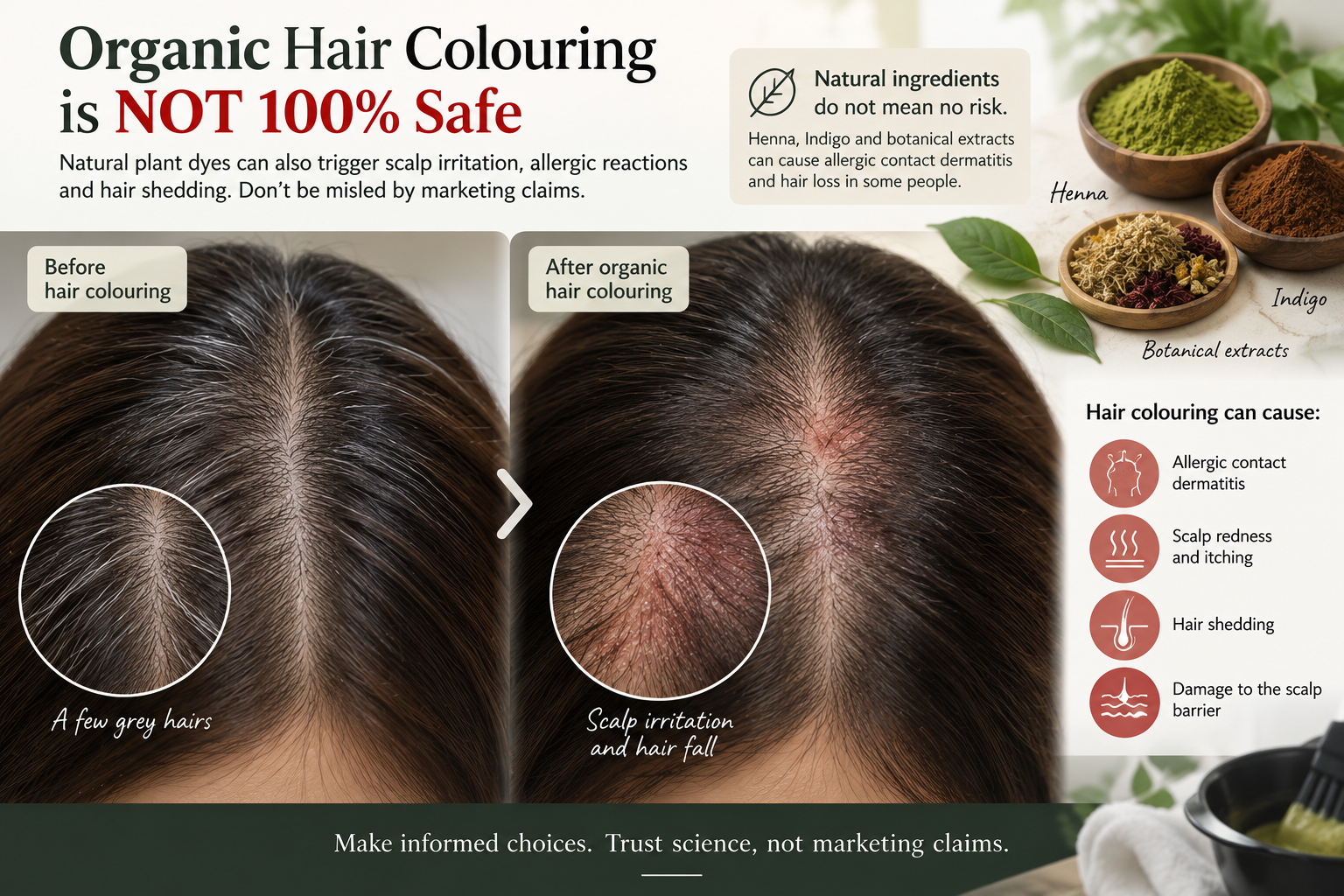
comparing organic vs synthetic chemical hair colouring ingredients, scalp contact dermatitis symptoms, and hair loss mechanisms.
Organic hair colouring has surged in popularity across consumer markets, frequently marketed as a completely harmless, non-toxic, and chemical-free solution for individuals wanting to cover greys or change their hair tone. However, a critical question remains: is it true that using organic hair colouring products provides a 100% guarantee against hair fall, scalp allergic reactions, or adverse side effects? From a clinical trichology and dermatological perspective, the short answer is no. The assumption that "organic" equals "zero risk" is a dangerous misconception that often leads to misdiagnosed scalp conditions and delayed medical care.
Defining Organic Hair Colouring
Organic hair colouring generally refers to hair dyes formulated primarily with plant-derived, botanical, or naturally harvested pigments—such as Henna (Lawsonia inermis), Indigo (Indigofera tinctoria), Chamomile, and Walnut shells—rather than synthetic aromatic amines. In commercial retail, "organic" formulations are usually free from aggressive alkaline agents like Ammonia (NH3), synthetic parabens, and high concentrations of Para-Phenylenediamine (PPD). However, consumers must recognise that almost all permanent or semi-permanent commercial dyes—even those labelled "organic"—require small amounts of chemical activators, synthetic couplers, or plant-extracted mordants to bind pigment to the hair shaft's keratin structure effectively.
"Hair dye contact dermatitis is a delayed-type hypersensitivity reaction affecting the scalp and facial hairline. Whilst synthetic aromatic amines remain primary sensitisers, natural plant-based pigments used in organic formulations contain complex protein structures capable of eliciting identical type I and type IV allergic contact responses in susceptible individuals."
— Gupta, M., et al. (2023). Dermatological adverse effects of hair dye use: A narrative review. Indian Journal of Dermatology, Venereology and Leprology, 89(4), 492–502.
Categorising "Organic" Ingredients That Cause Scalp Irritation and Allergies
To understand why natural dyes trigger adverse reactions, we must classify the organically derived ingredients that peer-reviewed dermatological studies routinely link to contact allergic dermatitis and telogen effluvium (acute hair shedding).
| Ingredient Category | Botanical / Chemical Name | Common Usage | Potential Scalp Reaction & Mechanism |
|---|---|---|---|
| Natural Plant Pigments | Henna (Lawsonia Inermis) & Indigo (Indigofera Tinctoria) | Natural Red, Brown, And Black Organic Dyes | Lawsone (The Active Compound In Henna) And Natural Indigo Proteins Act As Haptenic Sensitisers. They Can Trigger Severe Contact Urticaria, Vesicular Scaling, And Severe Pruritus (Itching). |
| Essential Oils & Botanical Extracts | Citrus Extracts, Tea Tree Oil, Rosemary Extract | Natural Fragrance And Shelf-Life Preservation | Volatile Terpene Compounds Oxidise Upon Exposure To Air, Becoming Potent Skin Allergens That Breakdown The Epidermal Scalp Barrier And Cause Immediate Burning Sensations. |
| Plant-Derived Surfactants & Emulsifiers | Cocamidopropyl Betaine (Derived From Coconut Oil) | Lathering Agent In Organic Dye Bases | Frequently Causes Delayed Type IV Hypersensitivity, Causing Localized Scalp Erythema, Flaking, And Follicular Inflammation Leading To Temporary Hair Fall. |
| Essential Metallic Salts & Mordants | Copper Sulphate, Iron Oxides, Alum | Color Fixatives In Natural/Herbal Dyes | Metallic Salts Bind To Hair Proteins; When Exposed To Subsequent Processing, They Generate Exothermic Chemical Reactions That Cause Scalp Chemical Burns And Mechanical Breakage. |
When the Scalp Rejects Organic Dyes but Tolerates Synthetic Chemicals
Dermatological literature highlights a counterintuitive phenomenon: certain clinical scalp conditions cannot tolerate organic hair dyes yet demonstrate high tolerance toward refined synthetic formulations.
Patients suffering from underlying inflammatory scalp conditions—such as Seborrheic Dermatitis, Scalp Psoriasis, or Atopic Dermatitis—possess a compromised epidermal skin barrier. Organic plant extracts contain hundreds of complex, unrefined botanical proteins, tannins, and phytochemical compounds. When applied to a disrupted scalp barrier, these complex plant structures readily penetrate the dermis, hyper-activating immune T-cells and inducing severe allergic contact dermatitis.
Conversely, modern synthetic hair colouring formulations often utilise isolated, highly purified single-molecule pigments (such as 2-Methoxymethyl-p-Phenylenediamine or ME-PPD). Because these purified chemical alternatives contain zero raw plant proteins or volatile terpenes, an inflamed scalp may process them without triggering an autoimmune or allergic response.
Comparison: Organic vs Chemical Hair Colouring Side Effects
| HAIR COLOURING RISK COMPARISON | ||
|---|---|---|
| RISK FACTOR | ORGANIC HAIR COLOURING | SYNTHETIC CHEMICAL DYE |
| Allergic Contact Dermatitis |
Moderate to High (Caused by raw plant proteins, terpenes, & natural haptens) |
High (Caused by PPD, PTD, Ammonia, & Resorcinol) |
| Follicular Hair Shedding (Fall) |
Moderate (Secondary to severe scalp inflammation & contact allergy) |
Moderate to High (Secondary to chemical root damage & shaft breakage) |
| Chemical Burns & Shaft Breakage |
Low to Moderate (High if metallic salts interact with previous treatments) |
Moderate to High (High if high-volume peroxide is misapplied) |
| Cross-Reactivity Risk |
Unpredictable (Cross-reacts with plant pollen, latex, and natural foods) |
Predictable (Predictable via standard dermatological patch tests) |
"A clinical evaluation of 105 patients with hair dye contact dermatitis revealed that 64.8% presented with localised lesions on the scalp, neck, and retroauricular skin. Interestingly, substitution with pure botanical alternatives (including henna, black tea, and indigo) resulted in persistent allergic contact reactions due to botanical cross-reactivity and natural plant-protein sensitisation."
— Sosted, H., et al. (2015/2024). Allergic contact dermatitis to hair dye ingredients and natural botanical substitutes. Contact Dermatitis Journal, 72(4), 201–209.
Why Assuming Organic Dyes Are Damage-Free Is Dangerous: A Real Case Study
Assuming organic hair products are incapable of causing damage misleads consumers into ignoring early warning signs of scalp trauma—such as mild tingling, burning, or redness—under the false belief that natural ingredients are inherently gentle.
Real Clinical Case Example
A 42-year-old female patient with a history of mild scalp sensitivity switched from traditional oxidative hair dyes to a 100% certified organic herbal hair colour containing Henna, Indigo, and raw botanical extracts to avoid chemical damage. After her third application, she experienced severe scalp burning, intense pruritus, and localised swelling.
Within two weeks of the reaction, she developed diffuse hair shedding (acute telogen effluvium), losing over 30% of her visible hair density. Clinical patch testing by a dermatologist confirmed a strong positive (+++) allergic reaction to Lawsone (the natural organic dye molecule in Henna) and natural Indigo extracts, while showing zero reactivity to specific low-sensitising synthetic dyes. Had the patient recognized that her initial post-application scalp tightness was an organic allergy, she could have avoided the repeated exposures that ultimately triggered follicular shedding (Lestari, S., et al., 2026),
"Natural dyes such as Indigofera tinctoria and Caesalpinia sappan exhibit significant cutaneous sensitisation capacity. In patch-tested cohorts, natural dyes produced higher rates of positive allergic contact responses than standard synthetic controls, proving that 'natural' origin does not correlate with immunological safety."
— Lestari, S., et al. (2026). Comparative patch testing of natural botanical dyes versus standard synthetic allergens in cutaneous hypersensitivity. Journal of Occupational & Environmental Dermatology, 41(2), 112–118.
The Importance of Individual Scalp Assessment
Every human scalp possesses a unique microbiome, barrier integrity, and immune threshold. Scalp conditions fluctuate continuously based on systemic factors, including hormonal shifts, autoimmune conditions (such as SLE or thyroid disorders), environmental stress, and diet.
To assume that your scalp will always remain healthy simply by relying on organic hair colouring products is scientifically invalid. Furthermore, commercial advertising that claims organic hair dyes "100% guarantee no hair loss or allergic reactions" is dangerously misleading. Safe hair colouring requires understanding your specific scalp health, Hair and scalp specialists at the Harley St. Hair Centre recommend performing patch tests 48 hours prior to any coloring procedure—regardless of whether using organic or chemical dyes—and Ideally, this assessment should be supervised by a dermatologist or a trichologist. Furthermore, a scalp check is advisable if you notice any abnormalities—such as excessive hair loss or signs of chronic irritation—following a colouring session, whether performed at home or in a salon
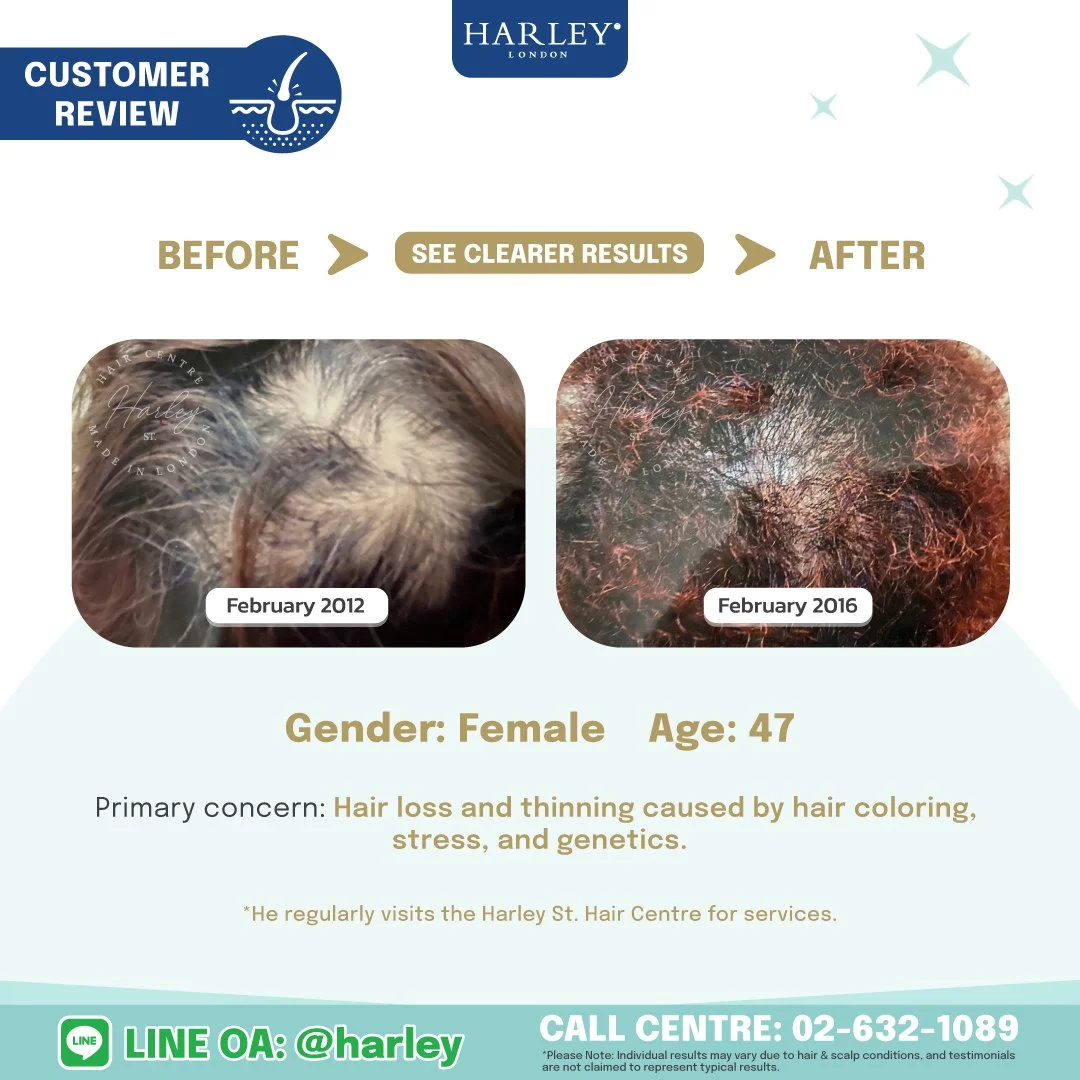
Before-and-after comparison showing the results of a female hair restoration for hair loss and Scalp Concerns caused by Hair Colouring following treatment at Harley St. Hair Centre.
FAQ (Frequently Asked Questions) :
-
Not necessarily. While organic hair dyes often lack ammonia or concentrated PPD, natural botanical ingredients like Henna, Indigo, and essential oils contain complex plant proteins and volatile terpenes. These compounds can still trigger severe allergic contact dermatitis and hair loss.
-
Permanent hair dyes and bleaching powders carry the highest risk. They rely on high concentrations of hydrogen peroxide, ammonia, and PPD/PTD, which strip the scalp's natural skin barrier and damage hair follicles, leading to chemical burns, follicular inflammation, and severe breakage or hair shedding.
-
If you have a sensitive scalp, follow these safety steps:
Perform a 48-Hour Patch Test: Test the dye behind your ear or inner arm before every application (for both organic and chemical formulas).
Avoid Direct Scalp Contact: Opt for off-scalp techniques like highlights or Balayage, leaving at least 1–2 cm from the roots.
Do Not Dye During Flare-ups: Never apply dye if your scalp is red, peeling, broken, or affected by active Seborrheic Dermatitis or Psoriasis.
-
Hair dye causes hair fall through two primary mechanisms:
Hair Shaft Breakage: Strong chemicals break down keratin bonds, leaving hair brittle and fragile enough to snap off near the scalp.
Acute Telogen Effluvium: Severe contact allergies or chemical irritation trigger scalp inflammation, causing hair follicles to prematurely enter the shedding phase.
-
An inflamed scalp barrier often hyper-reacts to complex unrefined botanical proteins found in organic dyes. Conversely, modern synthetic formulations using highly purified, single-molecule dyes (such as ME-PPD) lack plant proteins or volatile terpenes, allowing some sensitive scalps to tolerate them better.
-
Stop all hair colouring immediately and seek a professional scalp analysis. If you are unsure which hair dye formulation suits your sensitive scalp or are experiencing post-colouring hair loss, visit Harley St. Hair Centre for an in-depth diagnosis by our Hair and scalp specialists to identify sensitivity triggers and restore your scalp health safely.
Research & Medical Journal References :
Gupta, M., Mahajan, V. K., & Mehta, K. S. (2023). Dermatological adverse effects of hair dye use: A narrative review. Indian Journal of Dermatology, Venereology and Leprology, 89(4), 492–502.Lestari, S., Kurnia, R., & Wibowo, A. (2026). Comparative patch testing of natural botanical dyes versus standard synthetic allergens in cutaneous hypersensitivity. Journal of Occupational & Environmental Dermatology, 41(2), 112–118.Sosted, H., Johansen, J. D., & Andersen, K. E. (2015/2024). Allergic contact dermatitis to hair dye ingredients and natural botanical substitutes. Contact Dermatitis Journal, 72(4), 201–209.