Bangkok Floodwater & Scalp Health: How Rainy Season Moisture & Tap Water pH Trigger Acute Hair Loss (And How Trichology Can Fix It)
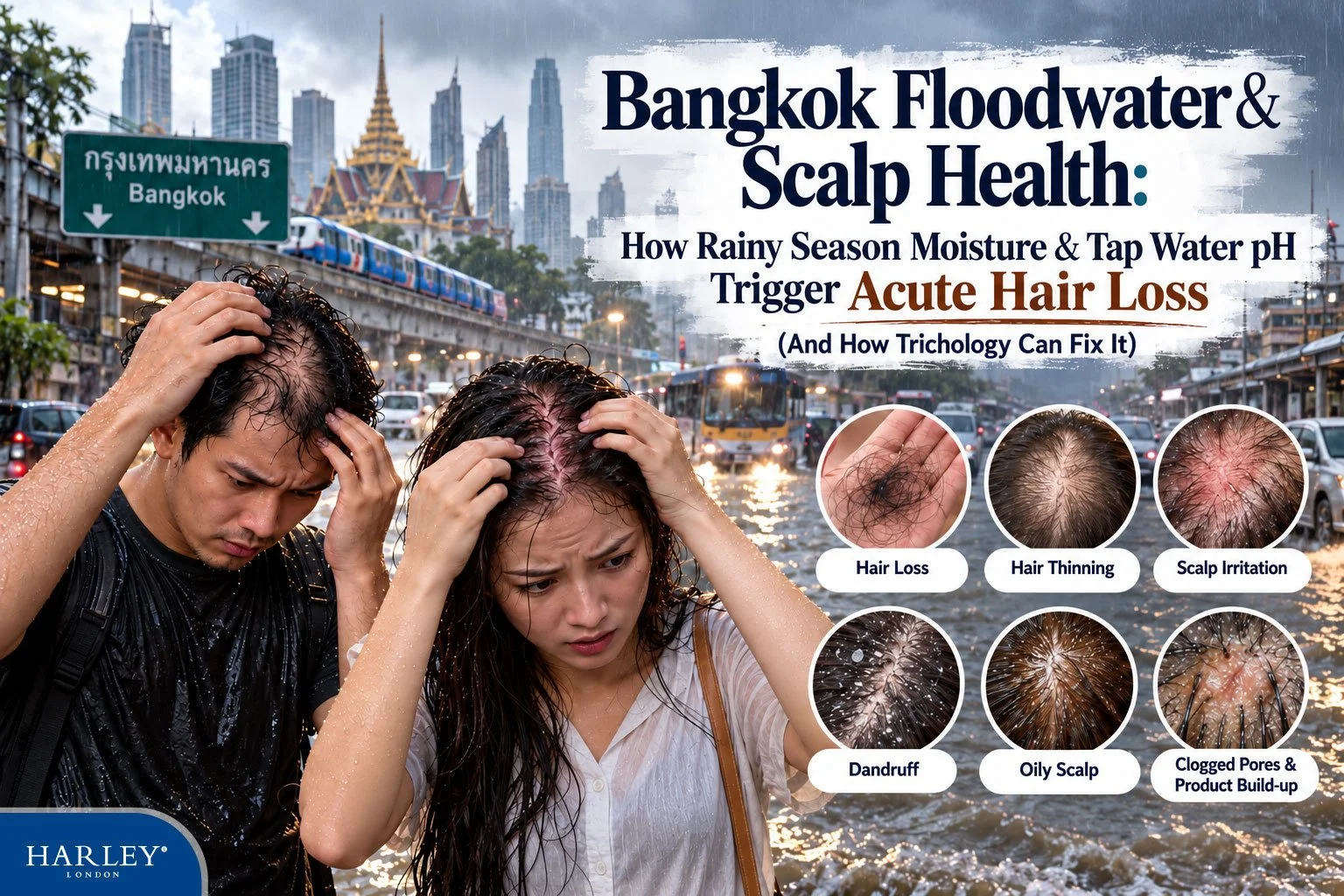
A man and a woman are experiencing scalp inflammation and hair thinning after coming into contact with floodwaters during the rainy season in Bangkok.
As the seasonal monsoons cause widespread flooding across Bangkok, public health discussions naturally focus on waterborne pathogens and physical damage. However, trichologists and scalp specialists observe another critical, albeit overlooked, epidemic following major flood events: a surge in severe scalp infections, inflammatory skin conditions, and acute hair loss. When floodwaters inundate the urban landscape, the combination of extreme atmospheric humidity, acidic rainfall, sewage runoff, and municipal water treatment shifts creates a hostile environment for the human scalp barrier. For residents navigating the wet conditions, understanding how environmental exposure impacts follicular health—and taking action before permanent damage occurs—is essential for maintaining hair density.
The Hidden Threat of Rainy Season & Flood Exposure
Scalp Hyper-Sebum Production, Humidity, and Microalgal-Bacterial Proliferation
The tropical monsoon climate brings ambient humidity levels exceeding 85% in metropolitan Bangkok. When individuals are exposed to floodwaters or heavy downpours, the scalp remains in a state of chronic dampness. This hyper-humid microclimate triggers excessive sebum production from the sebaceous glands, clogging the follicular infundibulum. The mixture of excess sebum, sweat, and stagnant floodwater—which carries urban pollutants, sewage, and soil-derived micro-organisms—creates an ideal breeding ground for opportunist microbiota. Lipid-dependent yeasts, particularly Malassezia species, proliferate exponentially under these conditions. As these fungal organisms metabolise scalp lipids, they release inflammatory free fatty acids that break down the stratum corneum, predisposing the tissue to scalp inflammation during the rainy season and aggressive flare-ups of seborrheic dermatitis associated with hair shedding).
— Borda, L. J., & Wikramanayake, T. C. (2015). Seborrheic Dermatitis and Dandruff: A Comprehensive Review. Journal of Clinical and Investigative Dermatology, 3(2), 10.13188/2373-1044.1000019.
Rainwater Acidity and Municipal Tap Water pH Disruptions
Beyond direct contact with dirty floodwater, the domestic water supply during severe weather events can impact scalp integrity. Flood conditions often force municipal water treatment plants to adjust chemical dosing, including chlorine levels, to counter heavy raw-water contamination. The physiological pH of a healthy human scalp is slightly acidic, typically resting between 4.5 and 5.5, which maintains the protective acid mantle and keeps hair cuticle scales tightly closed. Tap water with elevated alkaline pH or excessive free chlorine strips the scalp’s natural natural moisturizing factors (NMF) and lipids. This disruption compromises the epidermal barrier, leading to transepidermal water loss (TEWL), follicular hyperkeratinisation, and brittleness in the hair shaft, leaving the scalp vulnerable to secondary bacterial invasion.
— Gavazzoni Dias, M. F., de Almeida, A. M., Cecato, P. M. R., Adriano, A. R., & Pichler, J. (2014). The Shampoo pH can Affect the Hair: Myth or Reality? International Journal of Trichology, 6(3), 95–99.
Common Symptoms to Watch For Post-Rain/Flood Contact
Scalp Folliculitis, Persistent Pruritus, and Sticky Flaking
Direct contact with splashback from floodwaters or wearing damp headwear for extended periods frequently manifests as Bangkok flood scalp infection. The earliest clinical sign is persistent pruritus (intense itching) accompanied by trichodynia (scalp tenderness or burning). As bacteria such as Staphylococcus aureus or Pseudomonas species penetrate the compromised hair follicles, small, red pustules or papules form—a condition known as superficial bacterial folliculitis. Simultaneously, the overgrowth of yeasts creates sticky, yellowish flakes that adhere to the proximal hair shaft, choking the follicle opening and starving the hair root of optimal oxygenation and nutrient exchange.
— Lousada, F., et al. (2021). Scalp Microbiome and Its Impact on Hair Loss and Inflammatory Scalp Disorders. Journal of Dermatological Science, 102(1), 12–20.
Accelerated Hair Shedding: Flood-Induced Telogen Effluvium
A major concern following flood-related scalp trauma is the sudden, diffuse hair shedding known as hair loss caused by floodwater conditions. When hair follicles suffer from acute inflammatory shocks, oxidative stress, or severe local infections, they prematurely transition from the active growth phase (anagen) into the resting phase (telogen). This phenomenon, acute Telogen Effluvium, typically manifests 2 to 6 weeks after the initial exposure. Individuals often notice large clumps of hair falling out during washing or brushing, causing distress that can further exacerbate the physiological shedding cycle.
— Malkud, S. (2015). Telogen Effluvium: A Review. Journal of Clinical and Diagnostic Research, 9(9), WE01–WE03.
Immediate At-Home First Aid for Flood Exposure
Mild, pH-Balanced Cleansing Protocols
If your hair or scalp comes into contact with floodwater or heavy rain, immediate decontamination is critical. Rinse the scalp thoroughly with clean, temperature-neutral water as soon as possible. Utilize a mild, sulfate-free, pH-balanced cleansing solution (ideally pH 5.5) to gently wash away external particulates and chemical residue without stripping the underlying barrier lipids. Pat the scalp dry with a clean towel; avoid aggressive friction, and do not tie up hair while it remains damp, as trapped moisture inside hair bundles accelerates fungal colonisation.
— Draelos, Z. D. (2010). Essentials of Hair Care often neglected in Dermatologic Practice. Dermatology Clinics, 28(3), 595–597.
Why Heavy Anti-Dandruff Shampoos and Unprescribed Steroids Fail
When faced with sudden itching or flaking, many individuals resort to harsh, over-the-counter anti-dandruff shampoos containing high concentrations of coal tar or aggressive surfactants. Alternatively, some apply unprescribed topical steroid creams. These self-treatments often exacerbate the issue :
Harsh Surfactants: Strip the protective scalp barrier, triggering rebound hyper-seborrhea (overproduction of oil) and worsening inflammation.
Unprescribed Topical Steroids: Induce localized immunosuppression on the scalp skin. While they may temporarily reduce redness, they allow fungal and bacterial infections to spread deeper into the hair follicle, increasing the risk of scarring alopecia.
— Trüeb, R. M. (2018). Scalp Health and Hair Growth: The Importance of Scalp Hygiene and Barrier Function. International Journal of Cosmetic Science, 40(6), 521–528.
Why Consultation with a hair and scalp specialist is Essential
Self-diagnosing hair shedding following monsoon exposure often leads to inappropriate treatments that delay recovery. Booking a professional scalp health check in Bangkok ensures a precise trichological standard assessment. At Harley St. Hair Centre, qualified trichologists (hair and scalp specialists) utilise high-definition digital trichoscopy to examine the scalp at up to 200x magnification. This diagnostic imaging allows specialists to :
Identify hidden perifollicular erythema, pustules, and early-stage bacterial folliculitis.
Measure sebum density, micro-vascular changes, and exact follicular unit ratios.
Distinguish between temporary Telogen Effluvium and underlying pattern hair loss (Androgenetic Alopecia) unmasked by environmental stress.
— Rudnicka, L., Olszewska, M., & Rakowska, A. (2012). Atlas of Trichoscopy: Dermoscopy in Hair and Scalp Disease. Springer Science & Business Media.
Personalised, Non-Invasive Scalp Restoration at Harley St. Hair Centre
Once the precise etiology is determined, Harley St. Hair Centre delivers targeted Trichological hair treatment protocols designed to restore scalp homeostasis without harsh systemic side effects. Tailored treatment plans include :
Trichological-Grade Scalp Detoxification: Professional micro-exfoliation to clear keratinised debris, environmental toxins, and fungal biofilms from choked pore openings.
Photobiomodulation & Low-Level Light Therapy (LLLT): Calms active follicular inflammation, stimulates cellular ATP production, and encourages resting follicles back into the active anagen growth phase.
Micro-Nutrient Scalp Infusions: Customized topical applications rich in bio-identical peptides, antioxidants, and pH-stabilizing botanical extracts to fortify the skin barrier, rebalance the microbiome, and nourish thinning hair roots.
— Hamblin, M. R. (2014). Photobiomodulation for the Management of Hair Loss. Laser Therapy, 23(3), 161–169.
Frequently Asked Questions (FAQ) :
-
Floodwater itself does not pull hair out instantly, but exposure causes acute scalp inflammation, bacterial folliculitis, and fungal overgrowth. These conditions disrupt hair follicle anchors, causing a condition called Telogen Effluvium, where severe hair shedding starts 2 to 6 weeks after exposure. If you have been exposed to dirty rainwater, washing your scalp with clean, pH-balanced water immediately is crucial.
-
Prolonged moisture combined with Bangkok’s high humidity traps sweat, urban pollutants, and bacteria against your skin. This often leads to superficial bacterial folliculitis (infected hair follicles) or a flare-up of seborrheic dermatitis triggered by Malassezia yeast growth. Avoid picking these bumps or using harsh soaps, as this can introduce secondary infections and damage the hair follicles permanently.
-
During major flood events, municipal tap water may undergo adjustments in chlorine and mineral treatment to ensure potability. Water with an elevated pH or higher chlorine content alters the scalp’s natural acid mantle (pH 4.5–5.5), drying out the epidermal barrier and leaving hair shafts brittle. A compromised scalp barrier leads to chronic, low-grade micro-inflammation around the hair roots, accelerating hair thinning.
-
Over-the-counter anti-dandruff shampoos and self-selected treatments only address surface flakes and can sometimes worsen scalp irritation due to harsh chemicals. A Trichologist performs a microscopic scalp health check using high-magnification digital trichoscopy to diagnose the exact root cause—whether bacterial, fungal, or inflammatory—and creates a clinical-grade restoration protocol tailored to your scalp microbiome.
-
Harley St. Hair Centre offers a safer, scientifically validated trichological approach that avoids harsh chemicals or unverified remedies. Through comprehensive digital trichoscopy, our specialists assess your scalp health to locate follicle blockages and inflammation. We then design a non-invasive, personalised scalp recovery program—combining deep follicular detoxification, LED photobiomodulation, and bio-identical nutrient infusions—to eliminate infection, balance pH, and reactivate dormant hair follicles.
RESEARCH & MEDICAL Journal REFERENCES :
Borda, L. J., & Wikramanayake, T. C. (2015). Seborrheic Dermatitis and Dandruff: A Comprehensive Review. Journal of Clinical and Investigative Dermatology, 3(2), 10.13188/2373-1044.1000019.Draelos, Z. D. (2010). Essentials of Hair Care often neglected in Dermatologic Practice. Dermatology Clinics, 28(3), 595–597.Gavazzoni Dias, M. F., de Almeida, A. M., Cecato, P. M. R., Adriano, A. R., & Pichler, J. (2014). The Shampoo pH can Affect the Hair: Myth or Reality? International Journal of Trichology, 6(3), 95–99.Hamblin, M. R. (2014). Photobiomodulation for the Management of Hair Loss. Laser Therapy, 23(3), 161–169.Lousada, F., et al. (2021). Scalp Microbiome and Its Impact on Hair Loss and Inflammatory Scalp Disorders. Journal of Dermatological Science, 102(1), 12–20.Malkud, S. (2015). Telogen Effluvium: A Review. Journal of Clinical and Diagnostic Research, 9(9), WE01–WE03.
Rudnicka, L., Olszewska, M., & Rakowska, A. (2012). Atlas of Trichoscopy: Dermoscopy in Hair and Scalp Disease. Springer Science & Business Media.Trüeb, R. M. (2018). Scalp Health and Hair Growth: The Importance of Scalp Hygiene and Barrier Function. International Journal of Cosmetic Science, 40(6), 521–528.