The Dark Side of the Green Rush: How Thailand’s Matcha Obsession Could Be Thinning Your Hair
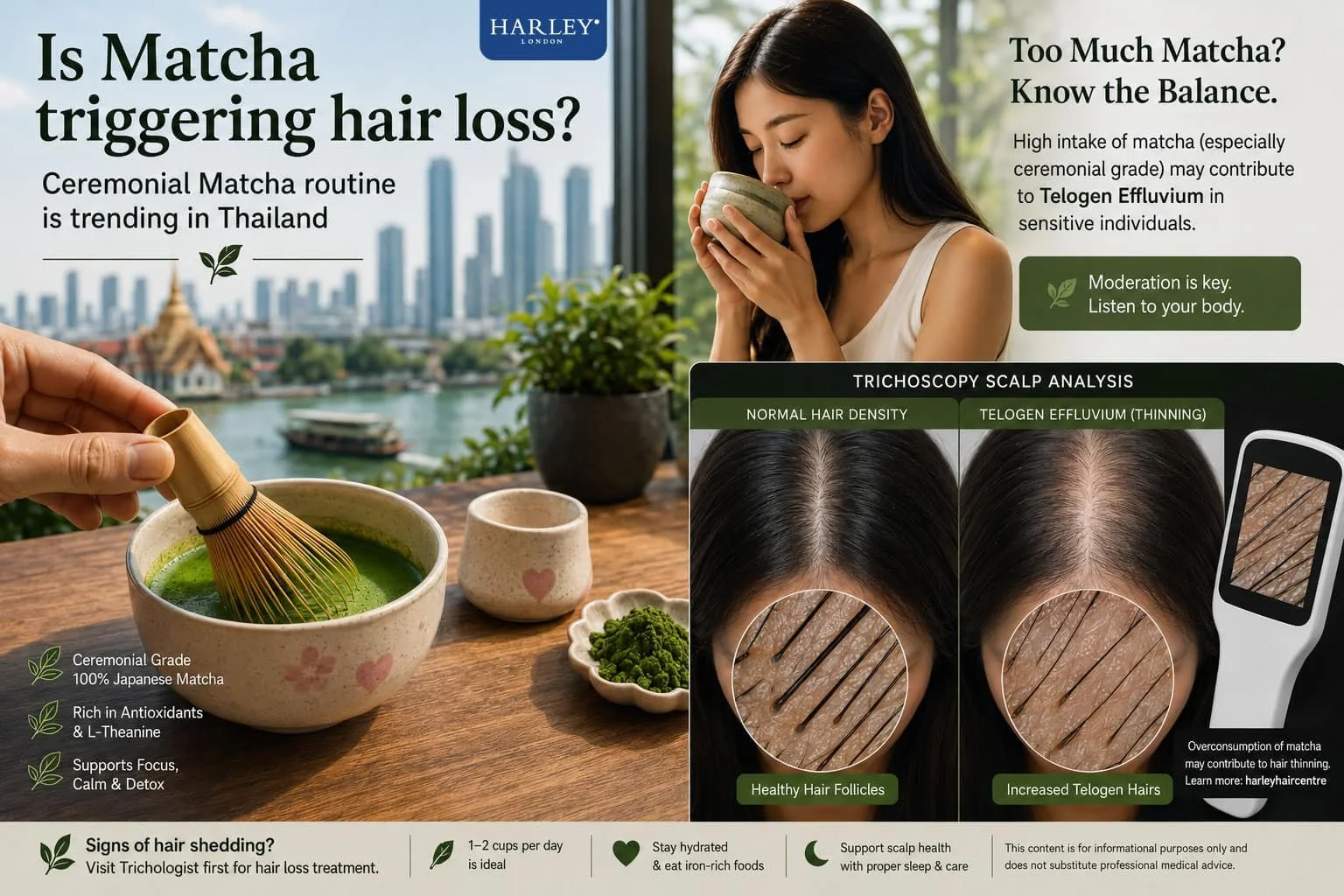
An Asian lady enjoying premium Japanese matcha green tea whisked in a traditional bowl on a Bangkok cafe table and showing signs of thinning hair.
From the bustling cafes of Bangkok to the serene tea rooms of Chiang Mai, Matcha has undeniably captured Thailand’s beverage scene. Celebrated for its rich earthy profile, intense antioxidants, and metabolism-boosting properties, it has evolved from a trendy drink into an everyday lifestyle staple.
However, beneath its vibrant, Instagram-ready green hue lies a growing concern that is keeping wellness experts awake at night. A spike in clinical cases suggests that an overconsumption of high-grade matcha may be secretly contributing to rapid, sudden, and long-term hair shedding—a condition known to experts as diffuse hair shedding or chronic Telogen Effluvium.
If you have noticed more hair strands than usual collecting in your shower drain since upgrading your daily caffeine routine to artisanal matchas, you are not imagining it. There is a precise, biological blueprint linking extreme tea consumption to structural follicle shock.
The Science: How Excess Matcha Triggers Hair Shedding
While moderate green tea consumption supports overall health, matcha is uniquely potent. Unlike standard steeped green tea where the leaves are discarded, matcha consists of the entire tea leaf ground into a fine powder. When you consume it, you ingest heavily concentrated botanical compounds. In excess, two specific mechanisms can aggressively disrupt your natural hair growth cycle.
1. High Polyphenol Load and Iron Blockade
Matcha is packed with epigallocatechin-3-gallate (EGCG) and highly concentrated plant tannins (PreetiArya, n.d.). While these polyphenols act as powerful antioxidants, they are also strong chelators—meaning they bind to minerals in your digestive tract.
Tannins bind heavily to non-heme iron (the type of iron found in plant foods and supplements), forming insoluble complexes that your body cannot absorb. Over time, drinking several ceremonial servings of matcha daily can silently tank your ferritin (stored iron) levels.
Because iron is a mandatory cofactor for ribonucleotide reductase—the rate-limiting enzyme required for hair cell division—depleted ferritin starves the highly active matrix cells within the hair bulb (Choi et al., 2024). Once the nutrient supply line is cut, the follicle is forced into premature hibernation.
2. Phase Disruption: Forcing Hair Out of Anagen
A healthy scalp typically has roughly 85% to 90% of its hair follicles active in the Anagen (growth) phase, with the remaining percentage resting in the Telogen (shedding) phase (Choi et al., 2024; Elnady, 0).
When your systemic biochemistry shifts due to a sudden overload of heavy plant compounds, intense caffeine surges, and subsequent nutrient imbalances, it shocks the delicate cellular signaling pathways (such as WNT/β-catenin and AKT) that maintain the growth phase (Choi et al., 2024; Sun et al., 2022). This metabolic stress acts as an environmental trigger, pushing a massive cohort of active follicles into the catagen (regression) phase simultaneously, resulting in a dramatic wave of hair shedding approximately 2 to 3 months later.
High-Risk Groups: Who Should Avoid Excessive Matcha to Prevent Hair Shedding and Health Decline
Excessive matcha consumption does not only disrupt the hair growth cycle in healthy individuals; for certain high-risk groups, the highly concentrated botanical compounds in matcha can exacerbate underlying health conditions and aggressively accelerate sudden hair shedding (Telogen Effluvium) and systemic biochemistry imbalances.
If you fall into any of the following categories, you should strictly limit your matcha intake or consult a certified Trichologist or your primary care physician before consuming it:
1. Individuals with Anemia or Low Stored Iron (Serum Ferritin) Levels
Risks to Hair and Health: Polyphenols in matcha, particularly Epigallocatechin gallate (EGCG) and highly concentrated plant tannins, act as potent chelators. They bind aggressively to non-heme iron (the type of iron found in plant foods and supplements) within the digestive tract, forming insoluble complexes that block iron absorption. Because iron is a mandatory cofactor for the enzymes required for hair matrix cell division, a drop in ferritin starves the follicles, forcing them into a premature shedding phase.
Medical Journal References:
Fan, F. S. (2016). Iron deficiency anemia due to excessive green tea drinking. Indian Journal of Medical Research, 144(5), 785–787.
(A clinical study confirming that excessive green tea ingestion directly induces severe iron-deficiency anemia and compromises systemic health.)
2. Women with Heavy Menstrual Bleeding (Menorrhagia)
Risks to Hair and Health: Women of reproductive age who experience heavy blood loss monthly often live with borderline or depleted iron stores (Serum Ferritin) without knowing it. Routinely drinking artisanal matcha further suppresses their iron absorption, easily dropping their serum ferritin below the critical threshold of 30 μg/L required to sustain the Anagen (growth) phase of the hair cycle.
Medical Journal References:
Trost, L. B., Bergfeld, W. F., & Calogeras, E. (2006). The diagnosis and treatment of iron deficiency and its potential relationship to hair loss. Journal of the American Academy of Dermatology, 54(5), 824–844.
(A landmark paper establishing a significant statistical link between depleted ferritin levels in women and various forms of diffuse hair loss.)
3. Individuals with Chronic Stress, High Anxiety, or Insomnia
Risks to Hair and Health: Because matcha involves ingesting the entire ground tea leaf, its caffeine content is significantly higher than standard steeped green tea. Excessive caffeine overstimulates the HPA (Hypothalamic-Pituitary-Adrenal) axis, spiking systemic cortisol (the primary stress hormone). Elevated cortisol degrades key follicular nutrients and acts as a biochemical signal that prematurely forces active hair follicles into the resting/shedding state. Furthermore, caffeine-induced insomnia halts nocturnal growth hormone release necessary for hair cell repair.
Medical Journal References:
Thom, E. (2016). Stress and the Hair Growth Cycle: Cortisol and Its Role in Hair Loss. Journal of Drugs in Dermatology, 15(8), 1001–1004.
(A study detailing the biological pathway through which stress-induced cortisol accelerates follicle regression and triggers acute Telogen Effluvium.)
4. Patients with Thyroid Disorders (Hyperthyroidism / Hypothyroidism)
Risks to Hair and Health: Thyroid hormones are fundamental regulators of human hair follicle development, and thyroid patients already suffer from structurally fragile hair cycles. The intense influx of botanical compounds and caffeine from overconsuming matcha can destabilize systemic metabolic rates. Additionally, heavy plant tannins can interfere with the gastrointestinal absorption of crucial thyroid medications (such as Levothyroxine), causing fluctuations in hormone levels that prolong chronic hair thinning.
Medical Journal References:
Hussein, R. S., Atia, T., & Binobaid, S. (2023). Impact of Thyroid Dysfunction on Hair Loss. Cureus, 15(8), e43224.
(A medical review highlighting the structural vulnerability of hair follicles in thyroid patients and how external dietary triggers accelerate loss.)
5. Individuals with Gastrointestinal Pathologies or Irritable Bowel Syndrome (IBS)
Risks to Hair and Health: Concentrated matcha is inherently acidic and rich in tannins, which can irritate sensitive gastric linings, leading to hyperacidity, bloating, or altered intestinal motility. In holistic medicine, hair health is deeply interconnected with the gut's ability to process food (the Gut-Hair Axis). When chronic low-grade gut inflammation is present, the optimal absorption of micronutrients essential for hair synthesis—such as zinc, B-vitamins, and amino acids—is heavily compromised.
Medical Journal References:
Bowe, W., & Logan, A. C. (2011). Acne vulgaris, probiotics and the gut-brain-skin axis - back to the future? Gut Pathogens, 3(1), 1.
(A foundational study mapping out how gastrointestinal dysbiosis and impaired nutrient absorption trigger systemic inflammation that directly damages the skin and hair follicles.)
Why a Holistic Trichologist is a Safer First Step than a Dermatologist
When handfuls of hair begin to fall out, the default reaction for many people in Thailand is to book an appointment with a general hospital dermatologist. However, treating internal, lifestyle-driven hair loss requires a highly specific approach that general dermatology may not fully address.
| HAIR LOSS ASSESSMENT | |
|---|---|
| DERMATOLOGIST | TRICHOLOGIST |
| • Focuses on Skin | • Focuses on Hair |
| • Disease/Pathology | • Holistic Systemic |
| • Pharmaceutical Fix | • Root-Cause Strategy |
The Limitations of General Dermatology
Dermatologists are medical doctors specialized in the entire integumentary system—meaning they treat thousands of conditions across the skin, nails, and scalp (Vano-Galvan, 2022). Because their scope is incredibly broad, hair loss consultations are frequently treated as secondary issues unless an active scalp disease (like alopecia areata or scarring lichen planus) is present.
The standard dermatological toolkit for hair loss is heavily reliant on quick, pharmaceutical-first interventions:
Topical or Oral Minoxidil to artificially force vasodilation (widening of blood vessels) (Vano-Galvan, 2022).
Hormone blockers (like Finasteride or Dutasteride) (Vano-Galvan, 2022).
Steroid lotions to suppress inflammation.
While highly effective for genetic or diseased states, these medications act as synthetic band-aids when dealing with lifestyle-induced telogen effluvium. They do not address why your body is rejecting its hair. If your loss is caused by a matcha-induced iron deficiency or gut microbiome imbalance, minoxidil will merely force a temporary growth cycle that collapses the moment you stop the medication.
The Trichological Advantage: True Root-Cause Analysis
A Trichologist is a dedicated specialist who focuses entirely on the science of the human hair and scalp (Mysore & Khopkar, 2007). Because they do not split their time treating skin rashes or acne, they approach hair thinning through a meticulous, multi-dimensional, holistic lens.
Rather than looking for a quick pharmaceutical fix, a Trichologist investigates the systemic environment:
In-Depth Nutritional Auditing
Microscopic Trichoscopy
Biochemical Markers
Holistic Hair Restoration
If you belong to any of these high-risk demographics but still wish to enjoy matcha, it is highly recommended to limit your daily intake to no more than 1 teaspoon (approx. 1.5–2 grams) per day. Crucially, avoid drinking matcha alongside or immediately after meals. Separate your tea consumption from your primary meals by at least 2 hours to prevent tannins from inhibiting your body's vital mineral and nutrient absorption.
Navigating Your Hair Recovery
If Thailand’s vibrant matcha culture has left your hair looking sparse, don't panic. Follicle shedding triggered by nutritional shifts and lifestyle excesses is entirely reversible if caught early.
Navigating your recovery with a Trichologist ensures you aren't just treating the symptom with generic hair serums; you are systematically healing your internal biology. In first-world medical systems across the United Kingdom and the United States, seeking out a certified Trichologist is well-established as the primary, frontline port of call for any scalp or hair thinning concerns (Mysore & Khopkar, 2007). It bridges the gap between basic cosmetology and aggressive clinical medicine.
By adjusting your daily dietary habits, restoring your optimal mineral baselines, and allowing an expert to guide your scalp health holistically, you can preserve both your love for wellness and the long-term density of your hair.
Medical References :
Bowe, W., & Logan, A. C. (2011). Acne vulgaris, probiotics and the gut-brain-skin axis - back to the future? Gut Pathogens, 3(1), 1.Choi, J. Y., Boo, M. Y., & Boo, Y. C. (2024). Can Plant Extracts Help Prevent Hair Loss or Promote Hair Growth? A Review Comparing Their Therapeutic Efficacies, Phytochemical Components, and Modulatory Targets. Molecules, 29(10), 2288.Elnady, R. E. (2023). The Future of Alopecia Treatment: Plant Extracts, Nanocarriers, and 3D Bioprinting in Focus. Plants, 12(21), 3739.Fan, F. S. (2016). Iron deficiency anemia due to excessive green tea drinking. Indian Journal of Medical Research, 144(5), 785–787.Hussein, R. S., Atia, T., & Binobaid, S. (2023). Impact of Thyroid Dysfunction on Hair Loss. Cureus, 15(8), e43224.Mysore, V., & Khopkar, U. (2007). Check if your trichologist is a doctor: Need for educating the public. Indian Journal of Dermatology, Venereology and Leprology, 73(3), 147.Thom, E. (2016). Stress and the Hair Growth Cycle: Cortisol and Its Role in Hair Loss. Journal of Drugs in Dermatology, 15(8), 1001–1004.Trost, L. B., Bergfeld, W. F., & Calogeras, E. (2006). The diagnosis and treatment of iron deficiency and its potential relationship to hair loss. Journal of the American Academy of Dermatology, 54(5), 824–844.PreetiArya, A. D. (2018). Green tea: Chemical composition, biological effects and health benefits. American Journal of Phytomedicine and Clinical Therapeutics, 6(3), 11-15.