The Hidden Cost of DIY Hormones: Hair Thinning in Thailand’s LGBTQ+ Community
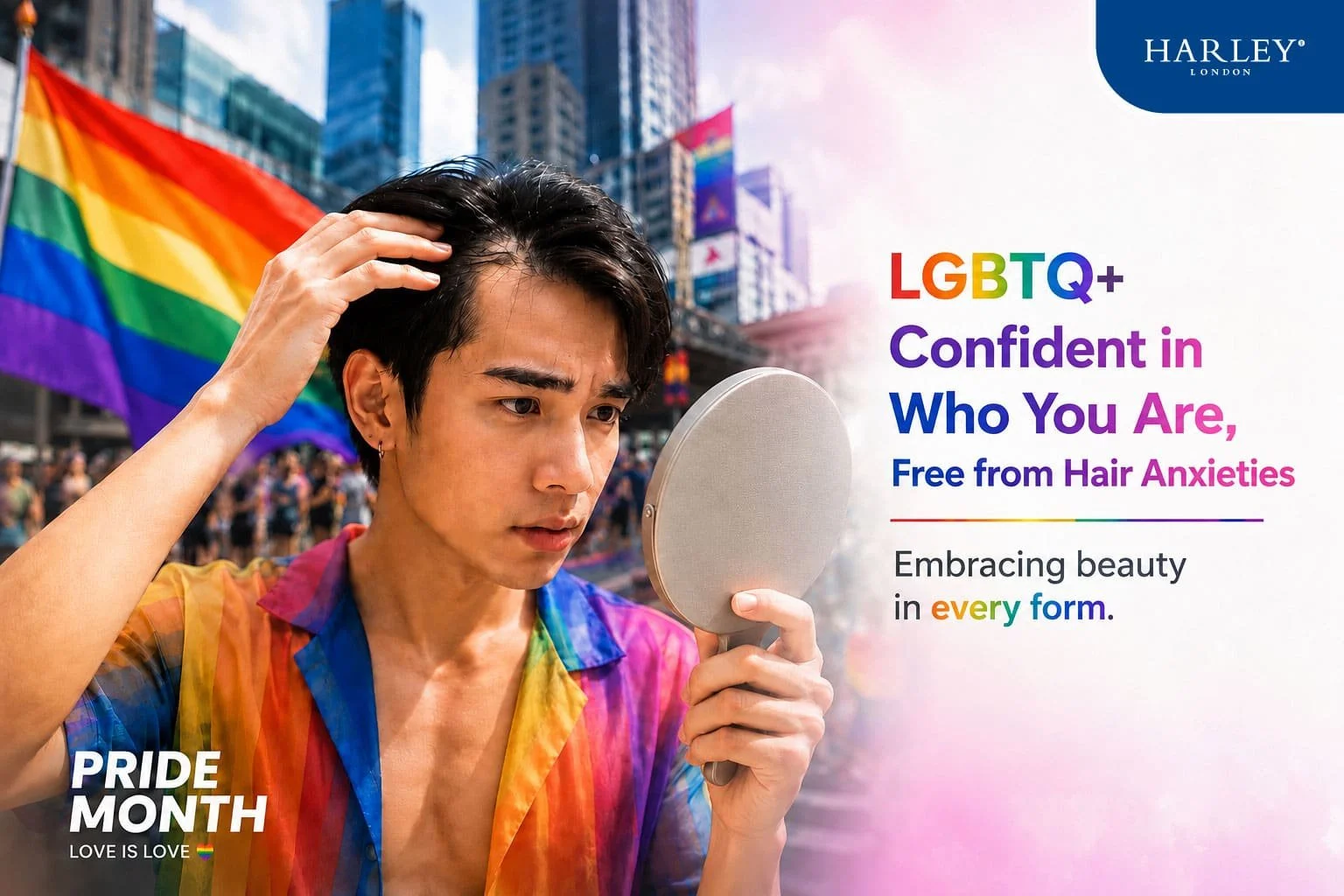
An LGBTQ individual in Thailand looking in a mirror with a worried expression while inspecting a thinning hairline and hair loss caused by DIY hormone use.
For many LGBTQ+ individuals in Thailand, altering secondary sexual characteristics is an empowering step toward self-actualization. Whether it is a transgender woman seeking a softer, more feminine appearance, a transgender man developing masculine features, or an individual taking hormones to shift away from an assigned birth sex, hormonal adjustments are deeply personal.
In Thailand, gender-affirming hormones and oral contraceptives are incredibly accessible, often bought over-the-counter at local pharmacies or through online vendors without a prescription. However, this high level of self-medication introduces a silent, frustrating side effect that catches many off guard: severe hair thinning and progressive hair loss.
The Biological Link: How Hormones Disrupt the Hair Growth Cycle
To understand why hormonal adjustments trigger hair thinning, it helps to understand how a normal hair strand grows. Every hair follicle on your head moves through three distinct phases:
Anagen: The active growth phase (lasting 2–6 years).
Catagen: The short transitional phase where the follicle shrinks.
Telogen: The resting phase, which culminates in the hair falling out so a new one can take its place.
When you introduce high doses of synthetic or unmonitored hormones into your system, you alter the underlying biochemical environment of the scalp, sending follicles into premature shedding or permanent miniaturization.
2 - 6 Years
2-3 Weeks
3-4 Months
1. Transgender Men and Testosterone: The DHT Paradox
For transgender men undergoing Testosterone Replacement Therapy (TRT) or receiving artificial hormone injections (such as testosterone enanthate), hair thinning is an incredibly common side effect (Rutnin et al., 2023).
Inside the body, an enzyme called 5-alpha-reductase converts free testosterone into Dihydrotestosterone (DHT)(Tominaga, 2025). While DHT is responsible for desirable changes like facial and body hair growth, it has a paradoxical, destructive effect on the scalp (Rutnin et al., 2023). It binds to receptors on the hair follicles of the crown and hairline, causing them to shrink—a process known as follicular miniaturization. Over time, the anagen (growth) phase becomes shorter, and the hairs grow back finer, thinner, and shorter until the follicle stops producing hair altogether, leading to Male Pattern Hair Loss (MPHL) (Tominaga, 2025).
Clinical data shows that 76.1% of transgender men develop male pattern hair loss within just two years of initiating testosterone therapy (Rutnin et al., 2023).
2. Transgender Women, Oral Contraceptives, and the "Shedding" Shock
Many young transgender women (Kathoey) in Thailand begin their transitions by consuming high-dose oral contraceptives (birth control pills) or ordering black-market estrogen injections. While estrogen generally promotes scalp hair health, the method and fluctuations of DIY dosing cause massive structural damage:
Progestin-Induced Thinning: Many over-the-counter birth control pills contain older generation synthetic progestins (like levonorgestrel) that possess high androgenic activity. Instead of blocking male hormones, they actually mimic them, binding to hair follicles and triggering hair thinning.
Telogen Effluvium (Shock Shedding): Rapidly switching between different brands of oral contraceptives or taking erratic doses of injectable hormones throws the endocrine system into shock. This structural stress forces a massive percentage of active growth (anagen) hairs into the resting (telogen) phase simultaneously. Roughly two to four months after the hormonal spike or drop, massive shedding occurs.
The Post-Surgery Drop: Following gender-affirming surgeries (such as an orchiectomy or vaginoplasty), the body experiences a sudden, dramatic drop in endogenous testosterone. While this helps with feminization, the massive, abrupt shifts in hormone baselines can trigger prolonged chronic telogen effluvium, leaving the hair looking sparse and lifeless for months.
The Danger of DIY Fixes: Real Risks in Thailand
Because clinical hair restoration treatments can be expensive, many LGBTQ+ individuals in Thailand turn to unverified online communities or local forums for "quick fixes." This has led to dangerous self-medication practices involving high-risk drugs.
Public Health Warning: Underground Medications
Thai medical news reports have highlighted dangerous cases where individuals have suffered severe systemic side effects from abusing hair-loss medications without supervision.
A common trend involves buying high-dose oral minoxidil or crushing up finasteride/dutasteride tablets meant for prostate treatments, combining them with contraceptive cocktails. Because these medications radically impact blood pressure and hormone production, unmonitored usage has resulted in severe complications, including:
Severe cardiovascular strain and dangerous drops in blood pressure (orthostatic hypotension) from oral minoxidil abuse.
Acute liver toxicity caused by filtering an excessive load of unprescribed synthetic steroids and oral hormones.
Prolonged, irreversible sexual dysfunction and severe depressive episodes.
Why You should seek a Trichologist, Not a Pharmacy Counter
If you are experiencing hair thinning due to hormonal changes, buying more pills off the shelf is not the answer.Treating hormone-induced hair loss requires a delicate, personalized medical approach.
A Trichologist—a specialized medical professional focused entirely on the health of the hair and scalp—is essential to ensuring you can regrow your hair safely without disrupting your gender affirmation goals.
The Clinical Difference: Safer Methods for Regrowing Hair
Rather than guessing which medications to take, a consultation with a certified trichologist offers targeted, evidence-based therapies:
Hair Follicle Therapies: Instead of dangerous high-dose oral options, a specialist can customised Detoxifying Scalp therapy to stimulate blood flow directly to starved follicles.
Hormone-Safe Botanical Inhibitors: For those who cannot take standard anti-androgens due to their specific transition roadmap, trichologists can utilise Non-medical topical formulations (like specialized peptides) that protect follicles locally without altering circulating blood hormone levels.
Comprehensive Scalp Analysis: Using digital trichoscopy, a specialist can determine if your hair loss is permanently miniaturizing (androgenetic) or temporary (telogen effluvium), saving you thousands of Baht on the wrong treatments.
Your hair is a major component of your identity, self-esteem, and personal presentation. Do not compromise your long-term cardiovascular, hepatic, or hormonal health by using dangerous, unverified medication cocktails. If you notice your hairline receding or your part widening, step away from the pharmacy counter and schedule a professional consultation with a trichologist today.
Clinical Insight: Safe Hair Restoration Without Pharmaceuticals or Hormones for the LGBTQ+ Community
For LGBTQ+ individuals in the UK, and other countries, especially in Thailand, anxiety surrounding hair loss, hair thinning, or androgenetic alopecia is often directly linked to the physiological side effects of gender-affirming hormone therapy (such as testosterone, oral contraceptives, or synthetic hormone injections). Furthermore, sudden systemic endocrine shifts following gender-affirming surgeries can disrupt the natural hair growth cycle. When seeking to remedy these issues, the approach must be selected with meticulous clinical care.
If your primary objective is to completely avoid synthetic pharmaceuticals and further hormonal adjustments—thereby eliminating risks to your hepatic and cardiovascular systems and ensuring no interference with your primary transition roadmap—the safest and most effective strategy is to arrange a clinical consultation with a qualified Trichologist (a specialist focusing entirely on the hair and scalp).
Modern trichological science offers several evidence-based, non-hormonal, and non-pharmaceutical interventions that are clinically proven to stimulate hair regrowth and arrest shedding at the follicle level without systemic exposure:
Undergoing a professional digital trichoscopy analysis will allow a specialist to accurately diagnose your exact shedding mechanism, creating a bespoke restoration programme that protects your long-term health and personal alignment.
Medical References :
Burg, D., Yamamoto, M., Namekata, M., Haklani, J., Koike, K., & Halasz, M. (2017). Promotion of anagen, increased hair density and reduction of hair fall in a clinical setting following identification of FGF5-inhibiting compounds. Clinical, Cosmetic and Investigational Dermatology, 10, 71–85.Fan, C., et al. (2026). Overview of Short Peptides for Hair Loss: Mechanisms and Emerging Non-Medical Strategies. Biomedicines, 14(4), 864.Mendoza, L. A., et al. (2025). Comprehensive Review on Hair Loss and Restorative Techniques: Advances in Diagnostic, Artistry, and Surgical Innovation. PMC/Cureus, 17(4), e12103887.Motosko, C. C., & Tosti, A. (2021). Dermatologic care of hair in transgender patients: A systematic review of literature. Dermatology and Therapy, 11(5), 1457–1468.Rutnin, S., Suchonwanit, P., Kositkuljorn, C., Pomsoong, C., Korpaisarn, S., Arunakul, J., & Rattananukrom, T. (2023). Characterizing dermatological conditions in the transgender population: A cross-sectional study. Transgender Health, 8(1), 89–99.Schiffer, R. (2021). Non-surgical Treatment Options for Male-pattern Baldness: A Comparative Meta-Analysis of LLLT and PRP. Touro Scholar, 14(2), 43–49.Tominaga, Y. (2025). The safety and efficacy of finasteride for transgender men with androgenetic alopecia. PMC.