The Incidence of Alopecia Areata Following COVID-19 Vaccination: What the Medical Evidence Reveals
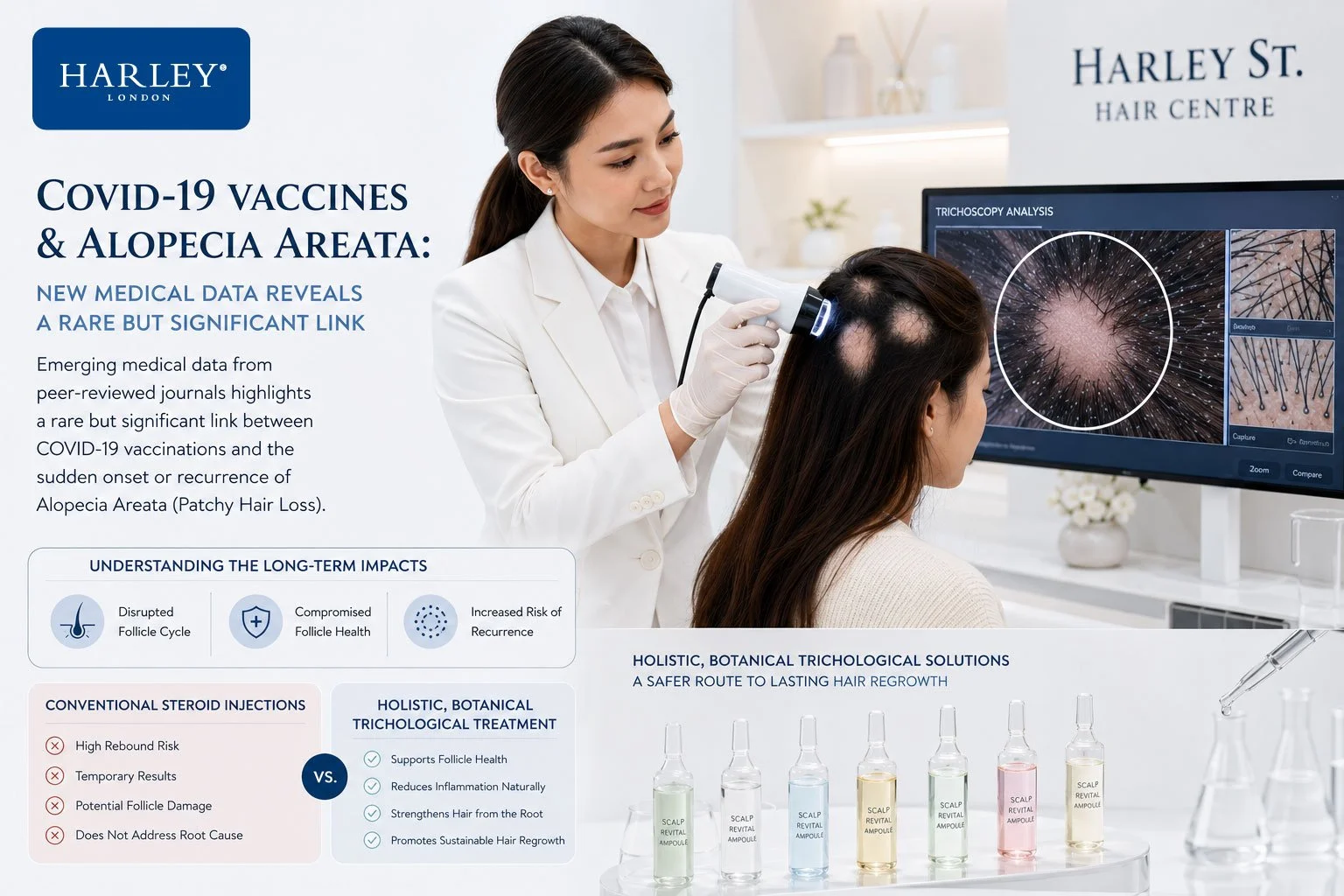
A female Hair and Scalp Specialist analysing female client’s hair and scalp condition that show signs of patchy hair loss (Alopecia Areata).
The global effort to curb the coronavirus pandemic led to the rapid development and distribution of mass vaccination programmes. While these vaccines have been instrumental in lowering mortality rates worldwide, large-scale post-marketing surveillance has highlighted a spectrum of rare cutaneous side effects. Among the most psychologically distressing of these reactions is the sudden onset or rapid recurrence of Alopecia Areata (AA).
Understanding the relationship between immune stimulation and follicle biology is essential for individuals navigating unexpected hair loss after receiving a vaccine.
What is a COVID-19 Vaccination?
A coronavirus disease 2019 (COVID-19) vaccination is a medical intervention designed to stimulate the host immune system into producing protective neutralizing antibodies against the SARS-CoV-2 virus (Guo et al., 2023). These vaccines utilise varying biochemical platforms to introduce the viral spike protein to human immune cells. The primary vaccine designs deployed globally include :
mRNA Vaccines (e.g., Pfizer-BioNTech, Moderna): Deliver lipid-nanoparticle-encapsulated messenger RNA that instructs host cell ribosomes to temporarily synthesize the non-pathogenic viral spike protein.
Viral Vector Vaccines (e.g., AstraZeneca-Oxford, Johnson & Johnson): Use a modified, harmless adenovirus to carry the genetic blueprint of the spike protein into human cells.
Inactivated or Protein Subunit Vaccines (e.g., Sinopharm, Sinovac): Introduce a weakened form of the actual virus or isolated, purified viral proteins combined with adjuvants to generate an immune response.
By exposing the immune system to these target antigens, the body develops long-lasting immunological memory, protecting the individual against severe systemic disease if exposed to the live virus in the future (Guo et al., 2023).
What is Alopecia Areata?
Alopecia Areata is a T-cell-mediated autoimmune condition characterised by non-scarring hair loss that traditionally presents as well-circumscribed, round patches of bare scalp or body skin (Xie et al., 2024). Under normal physiological conditions, hair follicles enjoy a protected state known as immune privilege. This mechanism limits the expression of Major Histocompatibility Complex (MHC) molecules, effectively shielding the rapidly dividing cells of the hair bulb from auto-reactive immune detection.
When Alopecia Areata is triggered, this protective immune privilege collapses. Cytotoxic T-lymphocytes (specifically CD8+ cells) mistake the hair follicle as foreign, invading the hair bulb environment and forcing active growing hairs (anagen phase) prematurely into a resting and shedding state (telogen phase). Depending on the severity and progression of the systemic autoimmune response, the condition can manifest in three major classifications:
Alopecia Subtype Extent of Clinical Manifestation
Patchy Alopecia Areata Distinct, localised, circular bald patches scattered across the scalp or beard region.
Alopecia Totalis (AT) Complete loss of terminal hair across the entire scalp.
Alopecia Universalis (AU) The most severe iteration, resulting in total hair loss across the entire scalp and body, including eyebrows, eyelashes, and body hair.
What’s the Connection?
The primary biochemical connection between COVID-19 vaccinations and the development or flare-up of Alopecia Areata lies in the profound activation of the host's innate and adaptive immune pathways. Systematic literature evaluations show that vaccinations can inadvertently disrupt the fragile immune privilege of the hair follicle via three primary pathways: molecular mimicry, bystander activation, and cytokine-driven inflammation (Guo et al., 2023; Xie et al., 2024).
When an mRNA or viral-vector vaccine prompts cells to manufacture the SARS-CoV-2 spike protein, it triggers a robust systemic release of pro-inflammatory cytokines, specifically Interferon-gamma (IFN-γ) and Interleukin-15 (IL-15). These specific signaling molecules are the exact drivers responsible for breaking down the hair follicle's immune privilege. IFN-γ upregulates MHC class I molecules around the hair bulb, exposing the follicle cells to circulating immune cells.
Simultaneously, the structural alignment of certain viral spike peptides can occasionally mirror human follicle peptides (molecular mimicry), causing highly primed, vaccine-induced T-cells to aggressively attack the healthy hair root cells (Guo et al., 2023; Xie et al., 2024).
Clinical and Medical Evidence Proving the Link
A growing body of peer-reviewed literature and systemic medical reviews confirms that Alopecia Areata can occur as a post-vaccination phenomenon. While large population reviews, such as a safety net institutional review published in Cureus, suggest that the baseline statistical odds of developing AA across the entire general public do not show a massive statistical spike (Chen et al., 2023), focused systematic reviews highlight that a highly specific, vulnerable subset of individuals faces a profound risk of new-onset or recurring disease.
A comprehensive systematic review published in the European Journal of Medical Research compiled international clinical records of patients who developed AA directly following vaccination (Zhu et al., 2024). The peer-reviewed findings documented that :
52.9% of cases represented entirely new-onset Alopecia Areata in individuals with no prior history of autoimmune hair loss.
47.1% of cases involved a rapid, severe recurrence or exacerbation of pre-existing, stable Alopecia Areata.
The phenomenon was tracked across multiple vaccine brands, with the mRNA Pfizer-BioNTech vaccine being the most frequently reported (45.1%), followed closely by the AstraZeneca adenoviral vector vaccine (27.5%) and Moderna (19.6%) (Zhu et al., 2024).
Clinical records show that this post-vaccination hair shedding occurs most frequently within one month following the first or second dose, demonstrating a clear chronological proximity to the peak period of vaccine-induced systemic immune upregulation (Zhu et al., 2024).
How Do We Know if a Person is Having Alopecia Areata as a Side Effect?
Determining whether an individual's hair loss is a direct adverse reaction to a COVID-19 vaccination requires careful evaluation of timing, structural hair patterns, and microscopic scalp changes. Clinicians look for a collection of specific physical signs and progressive scalp conditions :
Chronological Correlation: The sudden shedding or patch formation typically emerges within 2 to 4 weeks following a vaccine dose, aligning with peak systemic antibody production.
The "Exclamation Mark" Hair Sign: Under dermoscopic examination, the hairs at the margins of active patches reveal a narrow, tapered shaft near the root and a broader tip, resembling a literal exclamation mark (!). This indicates an abrupt, acute interruption of follicle growth.
Rapidly Expanding Smooth Patches: Unlike regular hair thinning, post-vaccine AA exhibits perfectly smooth, hairless circular zones that can merge into larger patches within days.
The Positive "Pull Test": Gently pulling a small bundle of hairs at the edge of a bald patch yields multiple intact hairs, demonstrating active, ongoing immune-driven follicle shedding.
Long-Term Side Effects and Concerns Regarding Follicle Health
A significant concern among patients in Thailand and globally is whether vaccine-induced immune disruptions can cause permanent damage to the scalp environment. The prolonged inflammatory response can sometimes progress beyond simple patchy loss, triggering long-term hair loss conditions and compromising overall follicle health.
When the systemic cytokine surge remains unchecked for months, the intense localized inflammation can damage the delicate microenvironment of the hair follicle stem cells. While Alopecia Areata is classically classified as a non-scarring condition (meaning the follicle itself is not permanently destroyed or replaced by scar tissue), prolonged immune stress can disrupt normal hair cycle regulation for a long period.
This frequently results in a chronic overlay of Telogen Effluvium (TE) —a state of massive, continuous daily shedding caused by the premature synchronization of hundreds of thousands of follicles into a resting phase (Martora et al., 2023). Without target-specific intervention to calm the scalp ecosystem, the underlying follicle matrix can become weak, producing progressively thinner, fragile hairs that struggle to complete a full, healthy lifecycle.
Treating Post-Vaccine Hair Loss: Dermatologists vs. Trichologists
When confronting heavy hair loss or patchy Alopecia Areata, individuals generally have two avenues for professional care: a Dermatologist (a general medical doctor specializing in the skin as a whole organ) or a Trichologist (a dedicated specialist focused purely on the holistic ecosystem of the hair, scalp, and systemic hair longevity). While both professions aim to resolve hair loss, their clinical methodologies, chemical applications, and long-term safety profiles differ significantly.
The Conventional Dermatological Approach: Aggressive Suppression
Standard dermatological interventions for Alopecia Areata rely heavily on rapid, broad immunosuppression to halt the T-cell attack. The standard protocols typically involve:
Intralesional Corticosteroid Injections: Injecting high-potency steroids directly into the bare scalp patches every 4 to 6 weeks.
Systemic Steroids or Synthetic Hormones: Oral medications designed to mute the body's global immune response.
Aggressive Regrowth Vasodilators: High-percentage chemical minoxidil or systemic medications.
The Medical Literature Catch: While these chemical interventions can force rapid initial hair regrowth, peer-reviewed records indicate that they frequently carry a high risk of rebound effects (Zhu et al., 2024). Once the strong steroid suppression is tapered off or stopped, the immune system often returns to the follicle with greater intensity, causing a more severe, widespread recurrence of the bald patches. Furthermore, long-term localized steroid use can cause scalp skin thinning (atrophy), suppress local microcirculation, and cause systemic side effects in individuals with underlying health conditions.
The Specialised Trichological Approach: Wellness and Longevity
In contrast, leading Trichologists, such as those at the Harley St. Hair Centre, treat post-vaccine Alopecia Areata by prioritizing the long-term stabilization of the scalp ecosystem and the natural recovery of follicle health. Because vaccine-induced hair loss stems from a highly sensitive, hyper-reactive immune status, introducing harsh synthetic chemicals can sometimes further stress an already compromised scalp environment.
The trichological recovery framework focuses on custom-tailored, gentle, and highly personalized recovery plans proven across numerous successful case files:
Bespoke Botanical Topical Programs: Utilising advanced, plant-derived botanical complexes tailored specifically to the individual's unique scalp pH and sebum profile. These active botanicals naturally soothe local cytokine cascades (such as IFN-γ) without damaging structural tissue.
Cellular Micro-Ecosystem Preservation: Avoids all synthetic hormones, heavy steroids, and systemic medications, ensuring zero systemic toxicity or chemical dependency.
Microcirculation Restoration: Employs precise, non-invasive therapeutic techniques to gently stimulate cellular activity and nutrient delivery directly to the hair bulb matrix.
Zero Rebound Risk: By focusing on topical wellness, longevity, and natural immune balance rather than forceful chemical suppression, the newly grown terminal hair is structurally sound and far less vulnerable to subsequent rebound shedding.
By addressing the root-cause scalp environment through custom botanical care, Trichologists provide a safe, holistic path to recovering healthy, vibrant hair after post-vaccination hair loss.
Medical References :
Chen, J., Cano-Besquet, S., Ghantarchyan, H., & Neeki, M. M. (2023). The Incidence of Alopecia Areata in a COVID-19-Vaccinated Population: A Single-Center Review. Cureus, 15(12), e50133.Guo, M., Liu, X., Chen, X., & Li, Q. (2023). Insights into new-onset autoimmune diseases after COVID-19 vaccination. Autoimmunity Reviews, 22(7), 103340.Martora, F., Battista, T., Ruggiero, A., Scalvenzi, M., Villani, A., Megna, M., & Potestio, L. (2023). The Impact of COVID-19 Vaccination on Inflammatory Skin Disorders and Other Cutaneous Diseases: A Review of the Published Literature. Viruses, 15(7), 1423.Xie, Y., Lv, S., Luo, S., Chen, Y., Du, M., Xu, Y., & Yang, D. (2024). The correlation between corona virus disease 2019 and alopecia areata: a literature review. Frontiers in Immunology, 15, 1347311.Zhu, Y., Ouyang, X., Zhang, D., Wang, X., Wu, L., Yu, S., Tan, Y., Li, W., & Li, C. (2024). Alopecia areata following COVID-19 vaccine: a systematic review. European Journal of Medical Research, 29(1), 346.