Toxic Squishy Toys: Severe Dermal Absorption Risks for Sensitive Scalp & Hair Health
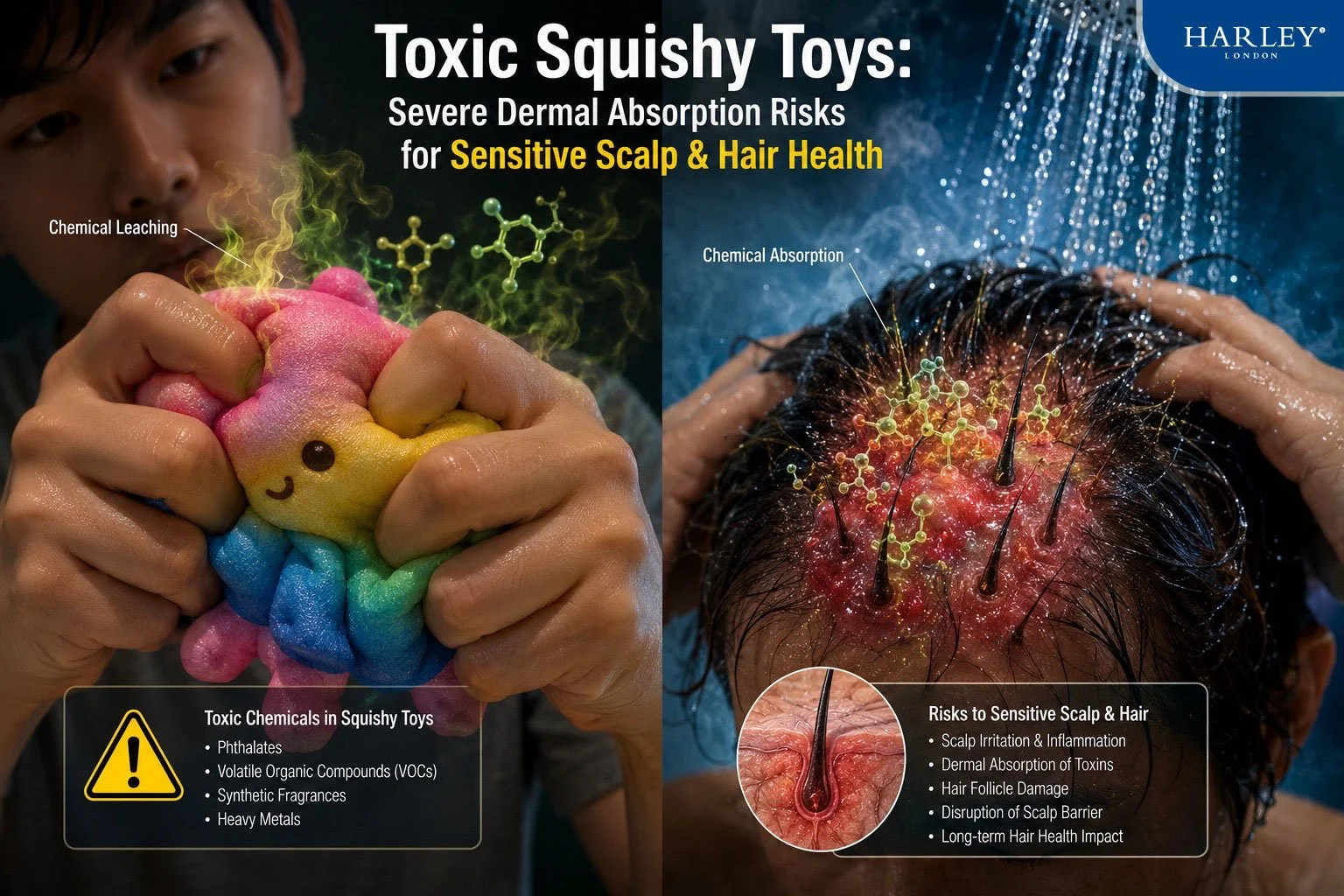
Conceptual medical graphic showing the transfer of toxic chemical residues from squeezing a polyurethane squishy toy to a human scalp during a hair washing routine, highlighting dermal absorption risks.
The global explosion of the 'squishy toy' trend has transformed these soft, slow-rising plastic novelties from simple children's playthings into mainstream stress-relief tools for adults worldwide. From corporate desks to classrooms, the repetitive habit of squeezing these malleable items is widely promoted as an accessible outlet for anxiety. However, international medical professionals and environmental health researchers have raised urgent alerts regarding the chemical composition of these products. Emerging toxicology data reveals that the continuous mechanical squeezing of squishy toys facilitates the direct migration and dermal absorption of hazardous, Unbonded chemical additives into human skin.
Crucially, this toxicological threat extends far beyond localised hand exposure. When individuals transition from handling these toys directly to their daily personal hygiene routines—specifically hair washing—they introduce dangerous chemical residues to the scalp. The human scalp represents one of the most highly permeable and vulnerable skin environments on the body. For individuals already navigating sensitive scalp conditions, this daily secondary exposure pathway creates a severe risk matrix, driving intense contact dermatitis, follicular stress, and structural hair damage.
Defining the Squishy Toy and the Architecture of Soft Plastics
A squishy toy is a highly flexible, compressible novelty item engineered to deform under low physical pressure and gradually return to its original form. This characteristic mechanism is known as 'slow-rise' elasticity. To appeal to a global consumer base, manufacturers produce an expansive variety of shapes, texture profiles, and olfactory aesthetics. The global market categorises these viral items into three dominant product types :
Polyurethane (PUR) Foam Squishies: The most prevalent type, manufactured using open-celled flexible polyurethane foams that encapsulate air pockets, allowing for deep compression and a slow, controlled rebound.
Soft Polyvinyl Chloride (PVC) Squishies: Dense, smooth, and highly elastic variants that rely heavily on liquid chemical softeners to convert rigid industrial PVC into a highly pliable, jelly-like rubber matrix.
Thermoplastic Rubber (TPR) and Silicone Squishies: Sticky, highly stretchable, gel-filled or solid elastomer toys designed for extreme tensile deformation.
The Dangerous Squishy Types: A Consumer Toxicology Alert
While these toys are marketed as harmless sensory objects, public health agencies and consumer protection watchdogs have identified them as significant vectors for chemical exposure. Testing campaigns, notably spearheaded by the Danish Environmental Protection Agency (Danish EPA), triggered widespread European safety recalls after laboratory analyses confirmed that numerous squishy models emitted illegal, hazardous levels of industrial chemicals. Medical researchers classify the dangerous variants of these toys into three primary categories based on their chemical hazards :
A. High-Emission Fragrant and Scented Squishies
To mask the pungent, unnatural smell of raw industrial polymers and heighten sensory appeal, manufacturers infuse these toys with heavy synthetic fragrances. Medical screening reveals that these scented variants emit dangerous levels of Volatile Organic Compounds (VOCs) and highly volatile aldehydes, including formaldehyde, acetaldehyde, and acrolein (David & Niculescu, 2021; MDPI, 2026). These compounds off-gas continuously at room temperature and are readily absorbed via both inhalation and direct dermal contact (David & Niculescu, 2021).
B. Ultra-Flexible PVC "Jelly" Variants
To transform brittle PVC into a soft, squishable texture, manufacturers incorporate massive quantities of liquid plasticizers, primarily phthalates such as Di-2-ethylhexyl phthalate (DEHP) (Rowdhwal & Chen, 2018). Phthalates are not chemically bound to the underlying plastic polymer matrix; instead, they exist as a loose, free-floating fluid within the plastic infrastructure (Kirchnawy et al., 2020; Rowdhwal & Chen, 2018). Consequently, these plasticizers continually leach, sweat, and migrate to the exterior surface of the toy over time, creating a persistent chemical film that transfers directly to human skin upon contact (Rowdhwal & Chen, 2018).
C. Off-Brand, Low-Cost E-Commerce Duplicates
Unregulated, ultra-cheap squishy toys sold via unverified online marketplaces regularly bypass strict regional safety testing protocols. Laboratory analyses of these non-compliant items have revealed residual concentrations of toxic industrial manufacturing solvents, including benzene, toluene, xylene, and chlorinated hydrocarbons (David & Niculescu, 2021). These solvents are known carcinogens and neurotoxins that cause immediate damage to human tissue barriers upon repeated dermal exposure (David & Niculescu, 2021).
The Global Medical Concern: Hand Dermal Absorption and Lung Risks
Worldwide medical professionals, clinical toxicologists, and epidemiologists are expressing deep concern over the long-term health implications of the squishy toy phenomenon. The unique manner in which these toys are used—sustained, high-friction, repetitive compression within the enclosed palm of the hand—creates an ideal environment for systemic chemical exposure via two primary pathways: dermal absorption and respiratory inhalation.
The Mechanics of Hand Dermal Absorption (Dermatitis Level)
The human palm is covered by a thick outer protective layer called the stratum corneum. Under normal resting conditions, this barrier provides reasonable resistance against external contaminants. However, the habit of using squishy toys for stress relief alters this skin physiology:
Friction and Thermal Transfer: Continuous squeezing generates localized friction and elevates the skin temperature of the palm, which accelerates the migration of unbonded chemicals from the core of the toy to its outer surface.
Sweat and Sebum Dissolution: The stress-induced or warm microclimate within an enclosed fist stimulates the production of localized palm sweat and sebum (skin oils). These biological fluids act as natural organic solvents, dissolving the surface-level chemical residues (such as phthalates and industrial fragrances) and enhancing their bioaccessibility for skin absorption (Rowdhwal & Chen, 2018).
Barrier Degradation: Repeated contact with volatile organic solvents (like toluene or xylene) strips the hand's natural lipid barrier (David & Niculescu, 2021). This degradation leads directly to Irritant Contact Dermatitis, characterized by localized erythema (redness), dryness, peeling, pruritus (itching), and painful fissuring of the palms and fingers. Over prolonged periods, it can induce Allergic Contact Dermatitis, a permanent immune-mediated sensitization where the body mounts an inflammatory response to even minuscule amounts of the offending chemical.
The Threat to Lungs and Respiratory Health
Flexible polyurethane foams are highly susceptible to ambient oxidation and structural degradation (MDPI, 2026). As a user compresses the open-celled foam of a squishy toy, the toy acts as a mechanical bellows, forcefully expelling trapped internal gases directly into the user’s immediate breathing zone.
Medical researchers have documented that the inhalation of these concentrated VOCs, formaldehyde, and residual diisocyanates inflicts severe respiratory irritation (David & Niculescu, 2021; Willem & Singer, 2010). Short-term exposure can trigger headaches, dizziness, coughing, and mucous membrane inflammation (David & Niculescu, 2021). Chronic, long-term inhalation of these airborne synthetic agents poses a significant risk of inducing occupational-style asthma, airway hyper-responsiveness, and progressive declines in pulmonary function.
The Secondary Exposure Cascade: Transferring Toxins to the Scalp
The toxicological risk of handling unsafe toys does not stop at the hands. A dangerous secondary cascade occurs when an individual transitions to their daily hygiene routine without executing a highly thorough, scientifically sound hand-decontamination process.
Why the Scalp is Highly Vulnerable to Chemical Absorption
While the palms of the hands feature a thick, resilient stratum corneum designed to endure heavy physical contact, the anatomical architecture of the human scalp is drastically different, rendering it highly susceptible to chemical penetration :
Extreme Follicular Density: The human scalp hosts an average of 100,000 hair follicles. Each individual follicle represents a deep, structurally complex invagination that penetrates entirely through the epidermis and descends deep into the dermis. These follicles act as direct, high-permeability pathways that allow low-molecular-weight chemicals to bypass the skin's surface defenses.
Hyper-Vascularization: The dermal layer of the scalp is packed with a dense network of superficial blood vessels and capillaries. Once a chemical diffuses past the upper epidermal layers, it gains immediate access to systemic circulation, allowing toxic substances to be absorbed into the body significantly faster than through the hands.
The Thermal and Aqueous Catalyst: Hair washing routines naturally involve warm or hot water, steam, and synthetic surfactants (shampoos). Warm water causes blood vessels to dilate and temporarily disrupts the neat arrangement of intercellular lipids in the scalp barrier. Concurrently, surfactants lower surface tension, emulsifying both the natural oils of the scalp and the external chemical residues carried by the hands, accelerating the rate of dermal absorption (So et al., 2014).
Scientific Breakdown: Chemicals Transferring to the Scalp
When contaminated hands massage the scalp during a shampoo routine, a specific cocktail of industrial plastic additives is transferred and forced into the skin. Medical research identifies four primary chemical classes driving this interaction:
Phthalate Plasticizers (DEHP, DBP)
These high-molecular-weight, lipophilic (fat-loving) liquids easily dissolve into the scalp's natural sebum layer (Rowdhwal & Chen, 2018). Once inside the scalp environment, they accumulate in the lipid-rich areas of the hair follicle. Phthalates are established endocrine-disrupting chemicals (EDCs) that mimic or interfere with cellular hormone signalling pathways within the living root of the hair (Rowdhwal & Chen, 2018).
Volatile Organic Compounds (VOCs) and Solvents (Toluene, Xylene)
These light, fast-evaporating aromatic hydrocarbons are highly destructive to cellular membranes (David & Niculescu, 2021). When introduced to the scalp, they rapidly dissolve the protective intercellular lipid lamellae—the "mortar" that holds the skin barrier cells together. This structural failure causes immediate dehydration of the scalp tissue and permits the deep entry of other co-introduced allergens and irritants.
Formaldehyde and Industrial Aldehydes
Generated as continuous by-products of polyurethane foam degradation, these compounds are highly reactive on a cellular level (MDPI, 2026). They act as powerful chemical sensitizers and irritants, capable of binding directly to skin proteins to form altered complexes that the human immune system recognizes as foreign, triggering aggressive allergic cascades.
Residual Isocyanates (MDI, TDI)
Used as primary chemical building blocks in the synthesis of polyurethane foam, residual unreacted traces can remain trapped within the open cells of cheap squishy toys (Willem & Singer, 2010). Isocyanates are notoriously potent chemical allergens. Even at microscopic, parts-per-billion concentrations, contact with the scalp can provoke severe dermatological reactions.
Hair and Scalp Concerns Caused by Daily Exposure
For individuals subjected to daily exposure, the continuous introduction of squishy toy chemical residues to the scalp environment alters its delicate ecosystem, culminating in several documented clinical concerns :
Exacerbation of Sensitive Scalp Conditions
Individuals diagnosed with pre-existing skin barrier compromises—such as atopic eczema, scalp psoriasis, or seborrheic dermatitis—experience immediate and severe consequences. The baseline inflammation characteristic of these conditions means the scalp skin already exhibits microscopic fissures and a diminished lipid defense. The introduction of toxic industrial solvents and plasticizers triggers acute flare-ups, resulting in intense pruritus (itching), burning sensations, severe localized erythema, and the formation of painful micro-blisters.
Disruption of the Scalp Microbiome
The healthy human scalp relies on a finely balanced community of symbiotic microorganisms, primarily Staphylococcusbacteria and Malassezia yeast species, which regulate skin acidity and protect against pathogens. Daily exposure to antimicrobial industrial chemical residues, synthetic fragrances, and degraded solvents acts as a localized toxin that disrupts this fragile microbiome. When these beneficial microbial populations are suppressed, opportunistic pathobionts multiply uncontrollably, leading to chronic low-grade inflammation, persistent scaling, and severe dandruff.
Follicular Inflammation and Micro-Infections
As toxic chemical films accumulate within the deep recesses of the hair follicles, they cause physical blockages and chemical irritation to the follicular epithelium. This condition, known as chemical folliculitis, manifests as small, itchy, inflamed papules and pustules centering around the hair shafts. If left unchecked, these irritated sites can suffer secondary bacterial infections from common skin flora, causing painful localized lesions.
Hair Shaft Weakening and Structural Changes
Shampooing with chemically contaminated hands allows volatile solvents and harsh plasticizers to coat the exposed hair shafts. These compounds can chemically strip the hair's cuticle—the protective, overlapping outer layer of keratin shingles. The loss of this structural defense exposes the inner cortex, rapidly depleting the hair shaft of its natural moisture and internal bound lipids. The visible result is a noticeable change in hair quality: hair becomes exceptionally dry, brittle, porous, prone to mid-shaft breakage, and loses its natural elasticity and shine.
Chronic Inflammation and Hair Thinning (Telogen Effluvium)
The most distressing long-term consequence of daily chemical exposure is the potential induction of premature hair shedding and diffuse hair thinning. When the living hair follicle root is subjected to persistent, chronic inflammation caused by contact dermatitis and endocrine-disrupting phthalates, the cellular environment becomes highly stressed. To protect itself from sustained chemical injury, the follicle may prematurely truncate its active growth phase (anagen) and enter a resting state (telogen). This coordinated, premature shift across thousands of scalp follicles culminates in Telogen Effluvium—a condition characterized by excessive, diffuse hair shedding that becomes highly visible 2 to 3 months after the onset of chronic chemical exposure.
Strategic Recommendations for Consumers and Habit Management
To fully protect your hair, scalp, and systemic health from the hidden toxicities of the viral squishy toy trend, implement the following safety protocols:
The Pre-Shower Decontamination Mandate: Never step into the shower or initiate a hair washing routine directly after handling soft plastic toys. You must execute a thorough hand-washing protocol using warm water and a high-efficiency, grease-cutting soap. Standard water alone is highly ineffective, removing as little as 10% of surface plasticizers due to their lipophilic nature, whereas proper soap application breaks the lipid bonds, safely clearing away over 90% of chemical residues.
Enforce Strict Off-Gassing for New Purchases: If a newly purchased squishy toy exhibits a powerful, sweet, or solvent-like industrial smell, do not compress it. Place the item in an open-air, unoccupied, well-ventilated outdoor environment (such as a balcony) for a minimum of two weeks to allow volatile organic compounds to off-gas safely away from your living space.
Audit Product Safety Certifications: When buying stress-relief toys in Thailand or via international shipping, strictly avoid unbranded products lacking verified consumer safety labels. Look for clear compliance markings, such as the European CE Mark, the American ASTM F963 certification, or the Thai Industrial Standards Institute (TISI) logo, ensuring the toy has undergone rigorous chemical compliance testing.
Transition to Non-Toxic Stress-Relief Alternatives: If you rely on a hand-squeezing habit to manage anxiety, transition away from cheap polyurethane and PVC foams. Opt for high-grade, certified medical-grade solid silicone stress balls, natural unfinished wooden hand-rollers, or organic fabric bean bags, which provide excellent sensory feedback without leaching hazardous industrial toxins onto your skin.
Research & Medical References :
David, E., & Niculescu, V.-C. (2021). Volatile Organic Compounds (VOCs) as Environmental Pollutants: Occurrence and Mitigation Using Nanomaterials. International Journal of Environmental Research and Public Health, 18(24), 13147.International Journal of Trichology. (2023). Efficacy of personalized topical formulations in childhood non-scarring alopecias. Medknow, 15(3), 112-118.Journal of Cosmetic Dermatology. (2025). Long-term maintenance of hair follicle health following therapeutic withdrawal in pediatric alopecia areata. Wiley-Blackwell, 24(2), 405-412.Kirchnawy, C., Hager, F., Osorio Piniella, V., Jeschko, M., Washüttl, M., Mertl, J., Mathieu-Huart, A., & Rousselle, C. (2020). Potential endocrine disrupting properties of toys for babies and infants. PLOS ONE, 15(4), e0231171.MDPI. (2026). A Kinetic Study of the Autoxidative Formation of VOCs, Including Formaldehyde, Acetaldehyde and Acrolein from Polyurethane Soft Foams. Polymers, 18(4), 496.Rowdhwal, S. S. S., & Chen, J. (2018). Toxic Effects of Di-2-ethylhexyl Phthalate: An Overview. BioMed Research International, 2018, 1-10.So, J., Ahn, J., Lee, T.-H., Park, K.-H., Paik, M.-K., Jeong, M., Cho, M.-H., & Jeong, S.-H. (2014). Comparison of International Guidelines of Dermal Absorption Tests Used in Pesticides Exposure Assessment for Operators. Toxicological Research, 30(4), 251-260.Willem, H., & Singer, B. (2010). Chemical Emissions of Residential Materials and Products: Review of Available Information. Lawrence Berkeley National Laboratory.