Hair Loss in Thailand 2026: When Tap Water and Chemicals Damage Hair Roots... Why Buying Shampoos or Pills Blindly Could Make Your Hair Even Thinner
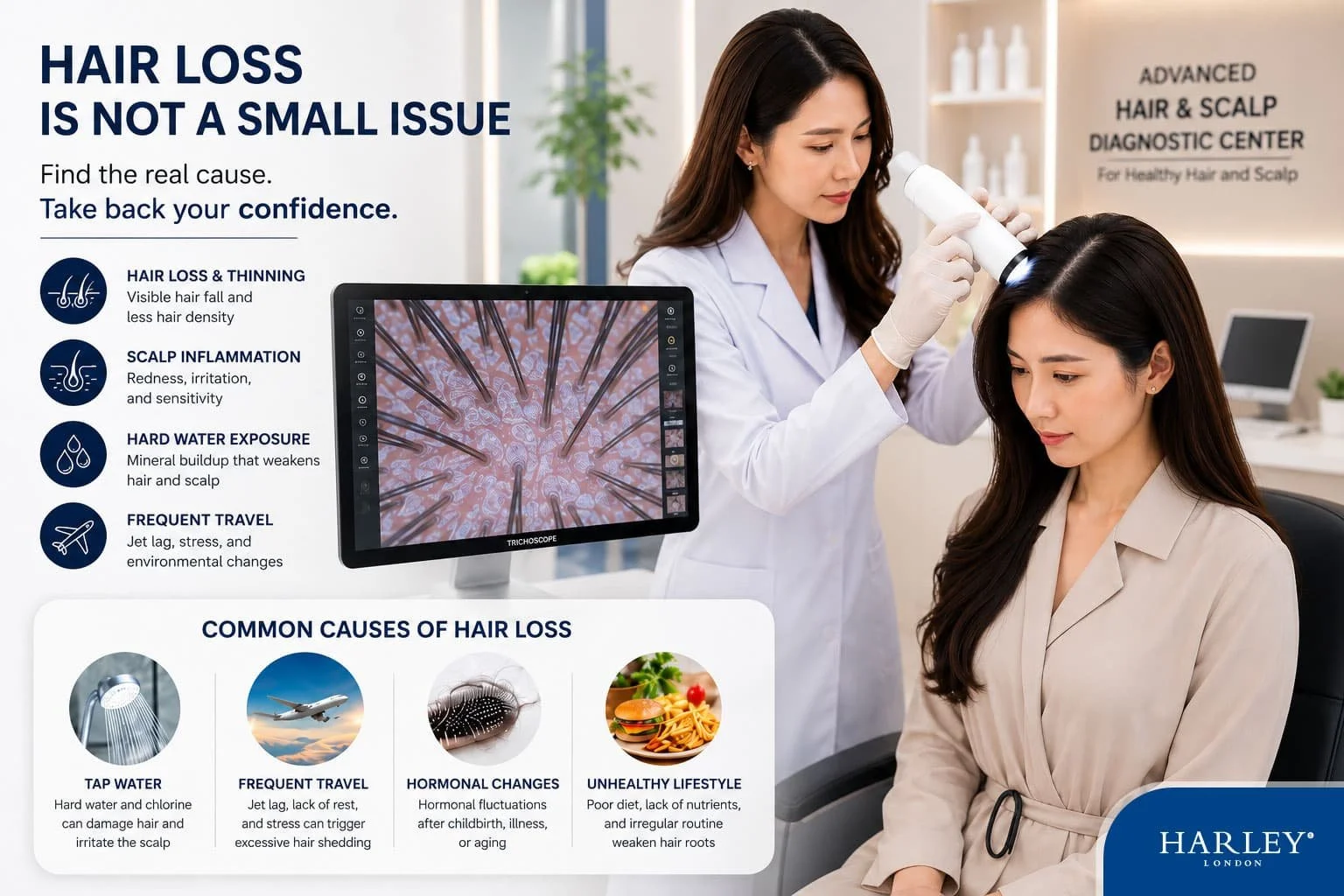
A Trichologist utilising a digital trichoscope to examine cause of hair loss linked to scalp inflammation and follicle blockage caused by hard water.
Have you noticed how, in 2026, almost everyone seems to be complaining about hair loss? Whether you are washing your hair, brushing it, or simply waking up in the morning, leaving behind a disheartening trail of fallen strands has become an all-too-common ordeal. Hair loss is no longer just a matter of genetics; it is increasingly accelerated by our modern environment, pollution, and daily lifestyle choices.
This article takes an in-depth look at the prominent hair loss trends in Thailand for 2026, contrasts them with global statistics, and uncovers a major hidden culprit that many overlook—local tap water. We also discuss how to address the issue safely and effectively.
What is Hair Loss? A Look at Trending Hair Conditions in Thailand 2026
In medical science, hair loss occurs when the natural hair growth cycle is disrupted. This disruption prematurely forces hair strands into the resting and shedding phase (Telogen phase) or causes hair follicles to miniaturise until they can no longer produce strong, healthy shafts.
According to search trends and clinical reports in Thailand for 2026, the most frequently reported types of hair loss include:
Androgenetic Alopecia (Pattern Hair Loss): This remains the leading cause in both men (characterised by a receding M-shaped hairline or thinning crown) and women (widening of the central parting).
Telogen Effluvium (Acute Shedding): This condition has seen a significant surge this year, triggered by stressful modern lifestyles, chronic fatigue, air pollution (such as PM2.5), and daily chemical exposure.
Scalp Dermatitis-Induced Hair Loss: Itchy bumps, severe dandruff, and flaking scalps, all of which compromise follicle health and weaken hair roots.
Comparing Hair Loss Trends: Thailand vs. The West (UK, USA, & Europe)
Whilst hair thinning is a global issue, the predominant types and environmental triggers vary considerably between individuals living in Thailand and those in Western countries:
Comparative Factors
Primary Types Reported
Thailand (& Southeast Asia)
Highly prevalent in Telogen Effluvium and Seborrheic Dermatitis (scalp inflammation) alongside genetics.
UK, USA, & Europe
Predominantly Androgenetic Alopecia (pure genetics) and autoimmune-related patchy hair loss (Alopecia Areata).
Climate Triggers
Thailand (& Southeast Asia)
Hot and humid tropical climate accelerates sebum (oil) production, creating an ideal breeding ground for fungi and bacteria.
UK, USA, & Europe
Cold and dry weather strips moisture from the scalp, making the hair shafts brittle and prone to breakage.
Washing Habits
Thailand (& Southeast Asia)
Locals wash their hair frequently (often 1–2 times a day) due to sweating, increasing exposure to water minerals and chemicals.
UK, USA, & Europe
Less frequent washing (typically every 3–4 days), leading to natural oil build-up but lower cumulative exposure to chlorine.
The Hidden Culprit: Tap Water pH, Chlorine, and Allergic Reactions in Bangkok and the Provinces
One of the most viral topics across Thai search engines in 2026 is: "Moved to Bangkok and my hair is falling out rapidly," or "Travelling to the provinces ruined my scalp." This phenomenon is heavily linked to municipal tap water quality and its pH levels.
The Impact of Excessive Chlorine and Unbalanced pH
High Chlorination in Cities: Tap water in metropolitan areas like Bangkok and its surrounding provinces contains chlorine levels compliant with public health sanitisation standards. However, when washing with warm water, chlorine vaporises and penetrates the pores, stripping away the scalp's natural lipid barrier. This leaves the scalp dry, irritated, and prone to follicular inflammation.
Hard Water and Alkaline pH in the Provinces: In various Thai provinces, well water or local tap water is often "hard water," heavily laden with dissolved calcium and magnesium. This gives the water a highly alkaline pH(well above the scalp's natural, slightly acidic balance of pH ≈5.5).
The Mechanism of Follicle Damage: When the scalp is repeatedly washed with alkaline, hard water, these minerals bind to the hair shafts and clog the pores (mineral build-up). This creates a stubborn film that blocks topically applied nutrients from reaching the roots. Furthermore, it forces the hair cuticles to remain open, leaving strands dry, frizzy, and highly susceptible to breakage, ultimately inducing localized folliculitis and severe shedding.
Why Buying "Anti-Hair Loss Shampoos" or "Oral Medications" Blindly Can Aggravate Hair Fall
When panic sets in, consumers frequently rush to purchase heavily advertised anti-hair loss shampoos online or discreetly buy hair growth pills (such as Finasteride or Minoxidil) over the counter. This trial-and-error approach carries significant risks:
Harsh Chemical Additives: Many commercial shampoos contain aggressive surfactants or heavy conditioning agents that conflict with your specific scalp type. If you suffer from an oily scalp but use a heavy, ultra-moisturising "anti-hair loss" formula, it will clog the follicles further and double the rate of hair fall.
Risks of Unmonitored Medication: Taking oral hair loss drugs without undergoing baseline blood tests, hormone panels, or liver function assessments can interfere with neurosteroids in the brain, potentially leading to depression, anxiety, and sexual dysfunction.
The Rebound Effect (Dread Shedding): If you rely solely on unprescribed medication to suppress symptoms, stopping the treatment abruptly can cause a sudden resetting of the hair cycle. This often results in a severe rebound shedding phase, leaving your hair significantly thinner than it was initially.
The Safer Alternative: Why You Should Consult a "Trichologist"
If you are looking for a sustainable, safe, and scientifically backed solution, seeking the expertise of a Trichologist (hair and scalp specialist) is the ideal choice. Trichology—the specialized science of the hair and scalp—focuses on holistic diagnosis rather than masking symptoms.
In-Depth Trichoscopic Analysis: A Trichologist uses specialised high-magnification cameras to analyze your scalp environment, identifying whether your hair fall is stemming from tap water mineral build-up, chlorine irritation, or genetic miniaturisation.
Bespoke, Tailored Treatments: Rather than a one-size-fits-all approach, you receive a protocol customized to your needs, such as restoring the scalp's natural pH, detoxifying mineral crusting, or utilizing safe topical peptides that do not disrupt your endocrine system.
Targeting the Root Cause: A Trichologist addresses both internal and external triggers—whether that involves recommending a specific shower filter to eliminate chlorine and balance water pH, or adjusting your nutritional intake.
Do not let your hair become a testing ground for random online or over-the-counter shampoos or high-risk oral medications. Investing time in a consultation with a Trichologist (hair and scalp specialist) is a far safer, more rewarding approach that restores your hair's density without compromising your long-term health.
Medical References :
Clinical Trichology Review (2024). Scalp pH deregulation and its connection to mineral buildup-induced Telogen Effluvium. Focus on Hair & Scalp Health Pathology.Evans, J. A. & Marshall, L. (2025). The cumulative effects of municipal water chlorination and mineral hardness on the scalp microenvironment and hair shaft integrity. Journal of Dermatological Science, 44(2), 112-120.Thomas, R. K. (2026). A comparative global analysis of hair loss typologies: Tropical humid climates vs. temperate zones. International Journal of Trichology, 18(3), 205-214.